
Last updated November 2, 2026
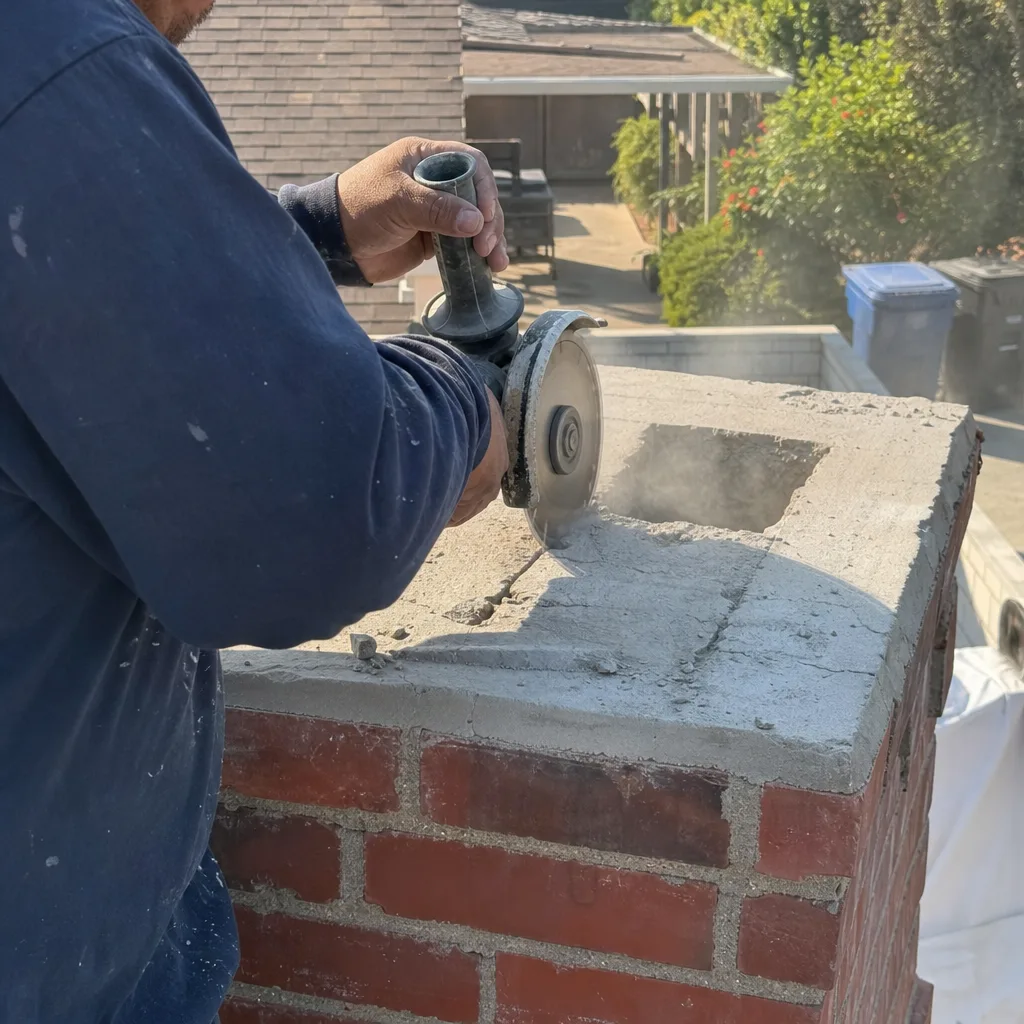
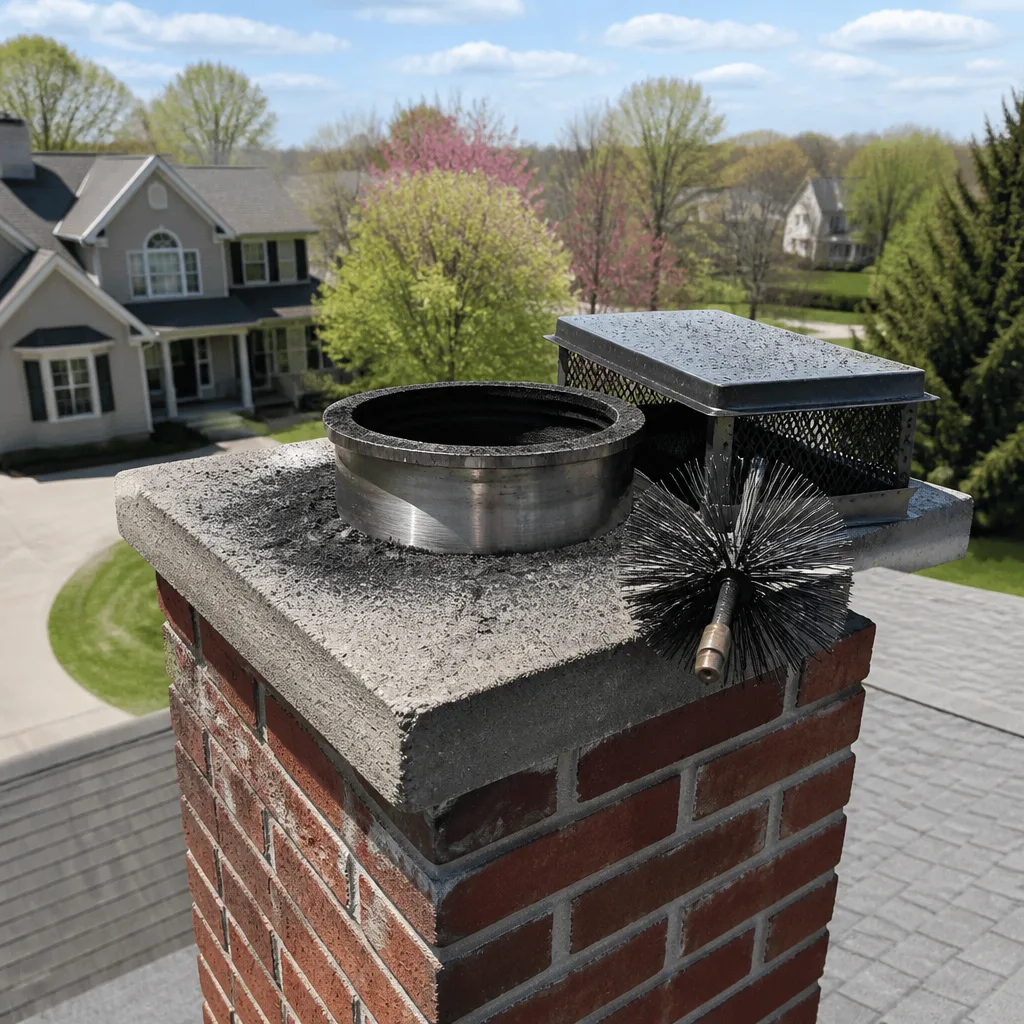 Sweep & inspection
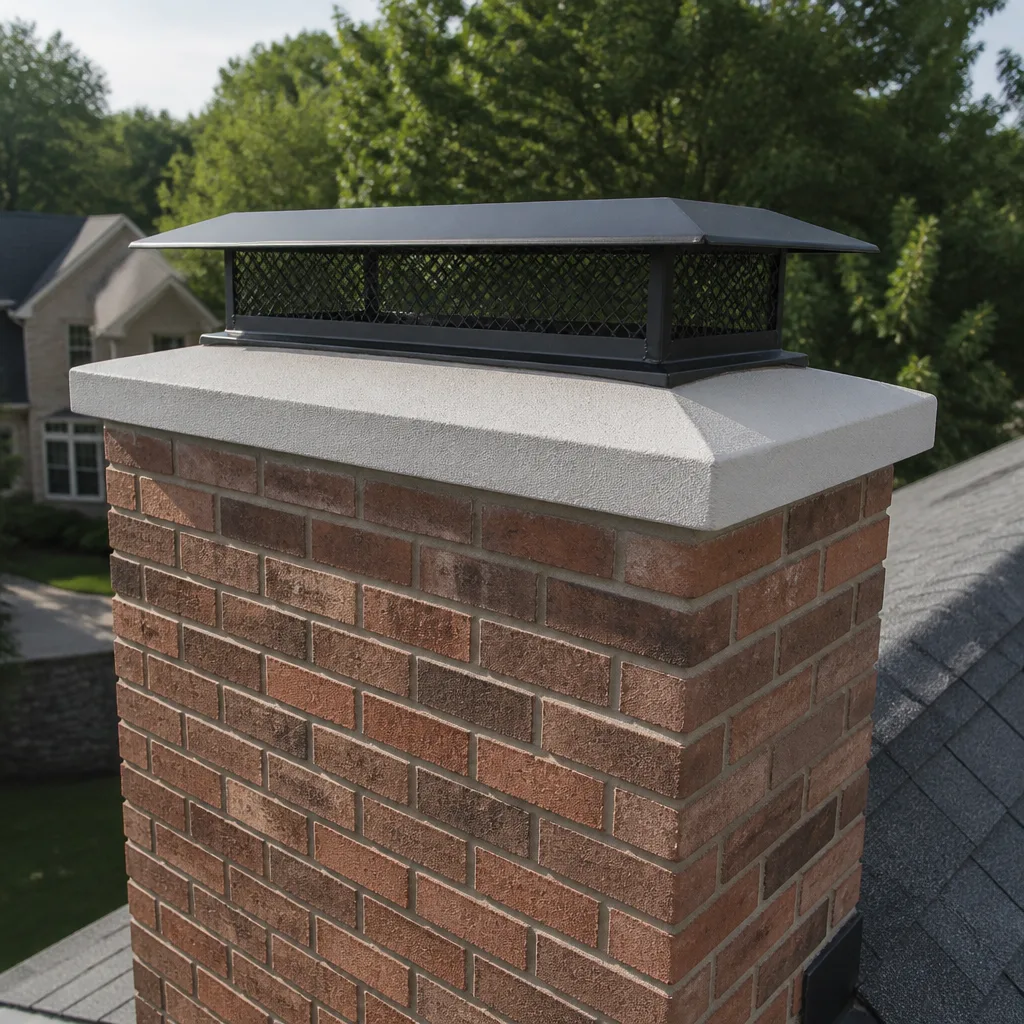 Caps & crowns
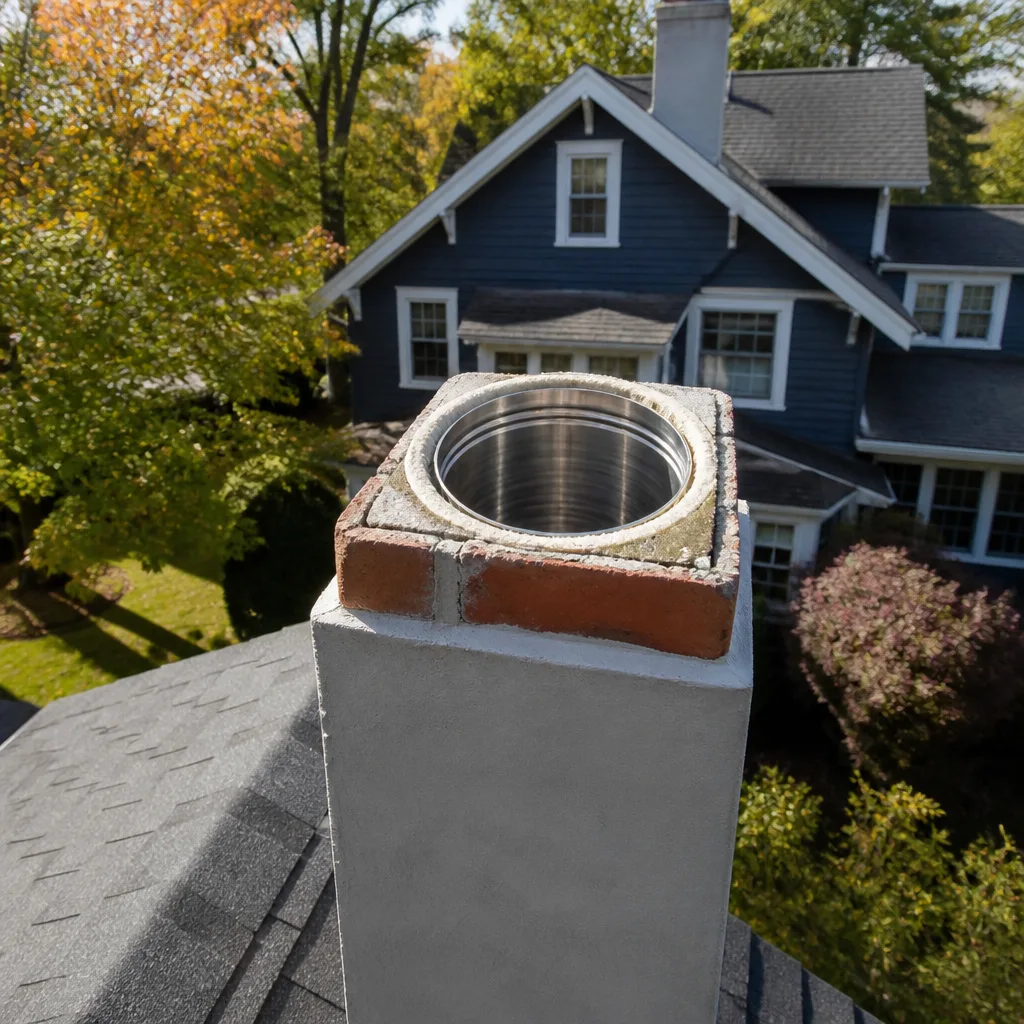 Flue relining
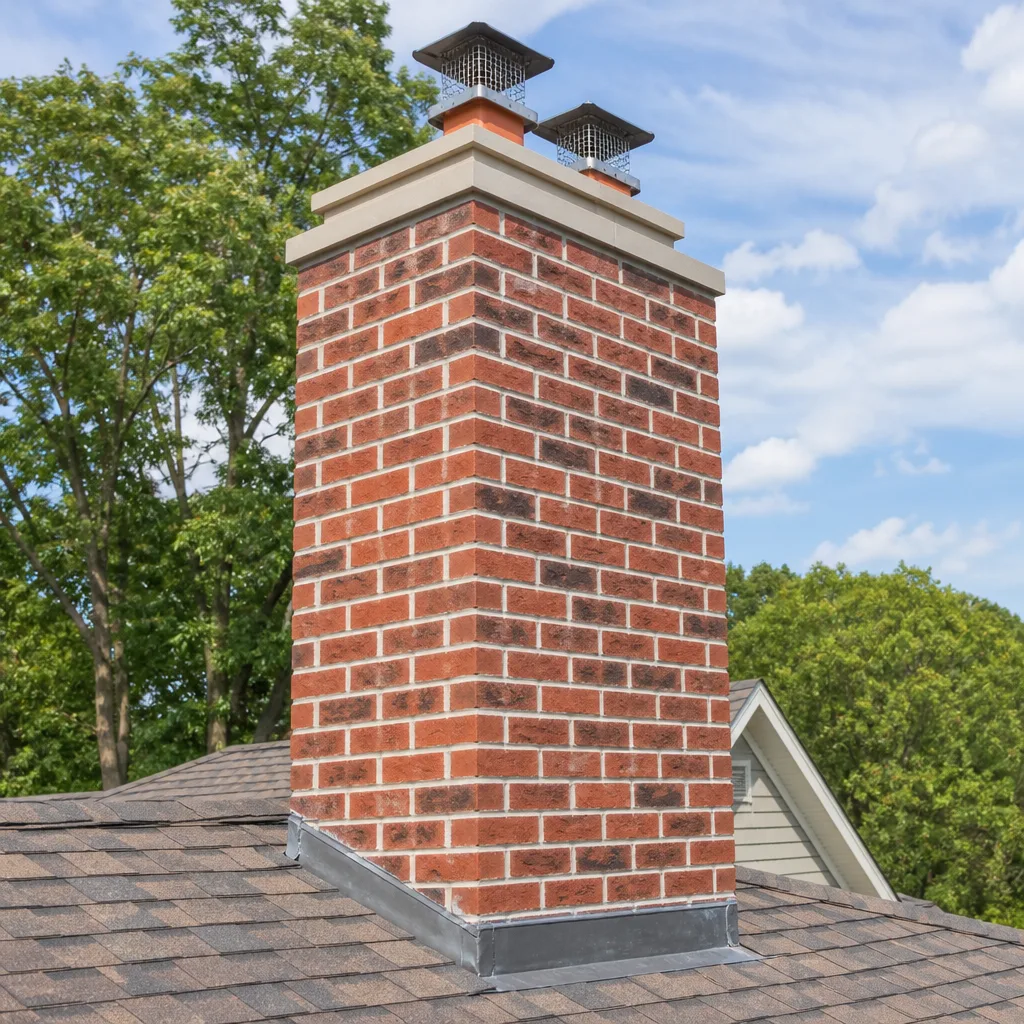 Masonry repair
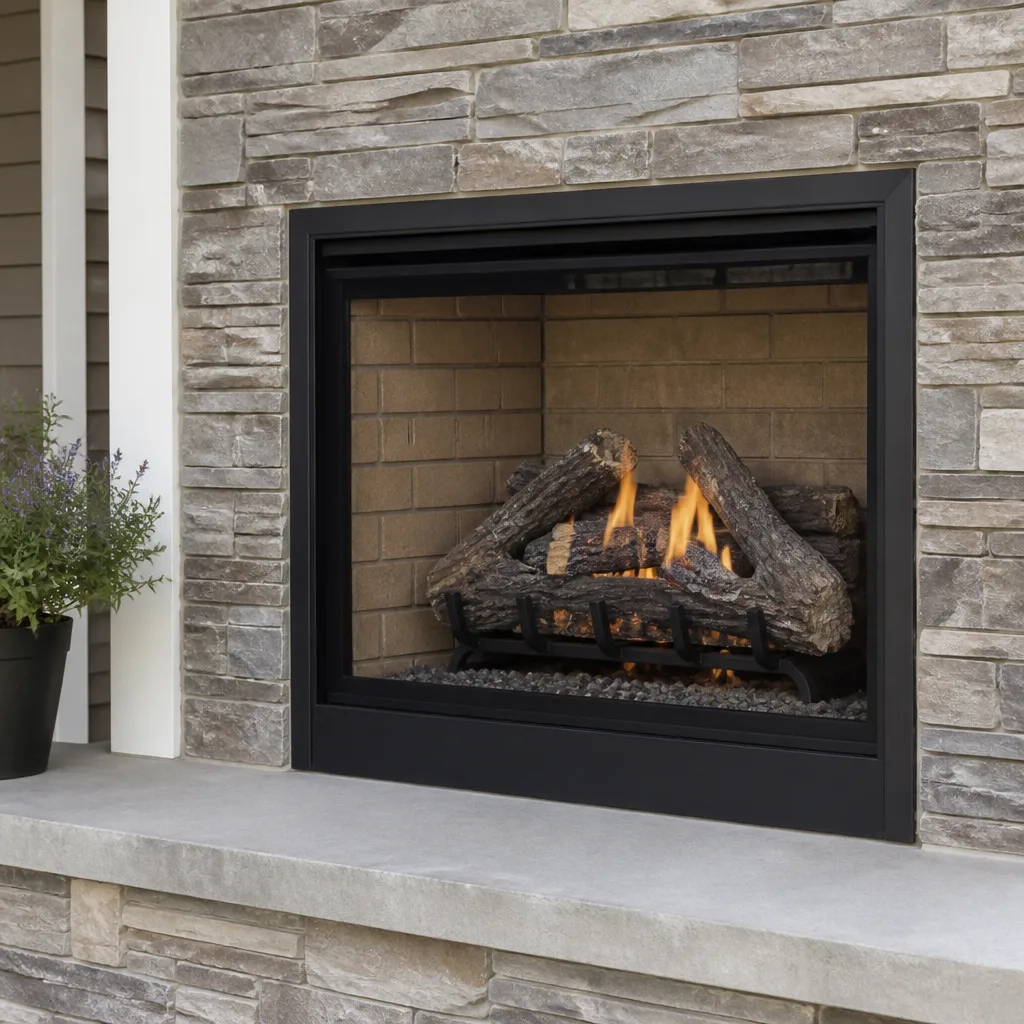 Gas fireplace service
Level 1 sweep and inspection to the NFPA 211 annual standard - flue, crown, cap, and flashing checked and photographed
Chimney sweep logs do not sweep chimneys. They loosen some creosote - which then falls where a brush and vacuum still have to collect it.
DIY vs Professional Chimney Cleaning: The Carson Homeowner’s Decision Guide
Chimney brush kits sell the idea that cleaning is the whole job. You attach the brush to a rod, shove it up the flue, vacuum the firebox, and call it done. But in Carson, where a significant share of fireplaces are either prefab wood units or gas inserts, the brush-and-vacuum approach addresses less than half of what a proper cleaning and inspection actually checks. This guide draws the line honestly based on what the task actually requires, what it cannot accomplish, and where a false sense of confidence becomes the real hazard.
Styles & brands we work with
- Sweep & inspection
- Caps & crowns
- Flue relining
- Masonry repair
- Gas fireplace service
Quick Answer
DIY chimney cleaning can remove loose soot from a straightforward masonry flue, but it cannot assess glazed creosote, liner cracks, firebox deterioration, or the condition of internal components in prefab and gas systems. For most Carson homeowners, a professional cleaning and camera inspection is the safer choice because it verifies what the brush alone cannot. The exception is a narrow set of conditions we’ll outline below, where a homeowner with the right tools and a clear flue can reasonably handle the basic sweep themselves.
Table of Contents
- What DIY Cleaning Actually Accomplishes
- What DIY Cleaning Cannot Assess
- The Prefab Fireplace Factor in Carson
- The Gas Insert Reality: Brushing the Wrong Problem
- Two Situations Where DIY Cleaning Is Reasonable
- Three Situations Where DIY Should Not Be Attempted
- Carson Climate and Creosote: What the Local Air Does to Flues
- Home Sales, Level 2 Inspections, and the Legal Exposure
- Common Mistakes to Avoid
- When to Call a Professional
- Frequently Asked Questions
- The Bottom Line
What DIY Cleaning Actually Accomplishes
A brush run through a flue removes loose, powdery soot. That’s a real thing. Stage 1 creosote, the flaky brown or black deposit that brushes off with moderate effort, responds fine to a poly or wire brush on a flexible rod system. If your fireplace burns seasoned hardwood, you use it a few times a month during the short Carson winter, and the flue is a straight run with accessible cleanout doors, a Sunday afternoon sweep can clear the bulk of what’s accumulated since last season.
The tools are straightforward: a chimney brush sized to your flue, connecting rods, a drop cloth, a shop vacuum with a fine-dust filter, and eye protection. Hardware stores sell kits for under $80. The process is also straightforward: cover the firebox opening, run the brush from the top down or bottom up, brush until the rods stop scraping, let the dust settle, vacuum everything.
Where DIY cleaning performs acceptably is maintenance between professional inspections. Think of it as brushing your teeth between dental visits. It keeps the worst of the buildup down. It does not replace the exam.
But here’s the thing Carson homeowners should understand: loose soot is rarely the component that causes chimney fires. The dangerous material is Stage 2 and Stage 3 creosote, the tar-like and glazed deposits that form when combustion is incomplete and flue temperatures run low. That material does not brush off. It requires mechanical removal with rotary loops or chemical treatment, and in advanced cases, it’s the first signal that the liner itself may be compromised.
What DIY Cleaning Cannot Assess
A brush tells you one thing: how much resistance it met. It tells you nothing about what the flue walls actually look like after the loose material is gone. In our experience, the homeowners who call us after a DIY attempt usually report the same thing: the brush went through, the firebox looks clean, so they assumed everything was fine. Then a smell returns, or smoke backs up, or an inspection reveals something the brush never touched.
Here’s what a brush-only cleaning cannot evaluate:
- Glazed creosote stage. Shiny, tar-like Stage 3 creosote looks almost like a lacquer coating. It reflects light. A brush skates over the surface and removes almost nothing. Only chemical breakdown or rotary mechanical removal addresses it, and only a camera inspection confirms it’s gone.
- Liner cracks and spalling. Clay tile liners crack from thermal stress and moisture. The cracks are often hidden behind a thin layer of soot. A brush doesn’t detect them. A camera does. A cracked liner is a direct path for heat and gases to reach combustible framing.
- Firebox mortar deterioration. The firebox takes direct flame. Over years, the mortar joints between firebricks erode. Gaps open. Heat reaches behind the firebrick. This is a structural decline that no amount of brushing addresses.
- Smoke chamber and damper condition. The area above the firebox and below the flue is a common creosote trap. DIY brush systems often skip this section entirely because it’s angled and awkward. A professional cleaning includes it.
- Chimney cap and crown integrity. Rain entry is the leading cause of premature liner and masonry damage. A homeowner cleaning from the top might notice a missing cap, but most DIY jobs happen from the bottom, where the cap is never seen.
The pattern is consistent: what DIY cleaning accomplishes is visible. What it misses is hidden. And in chimneys, the hidden things are the ones that burn houses down.
The Prefab Fireplace Factor in Carson
Carson’s housing stock includes a high proportion of homes built from the 1970s onward, and that era’s fireplace of choice was the prefab, zero-clearance unit. These are factory-built sheet metal fireboxes with double or triple-wall metal flue pipe. They look like fireplaces, they behave like fireplaces, but structurally they share almost nothing with a masonry chimney.
This distinction matters enormously for DIY cleaning. Chimney sweeping in Carson for prefab units is not just a matter of running a brush. Prefab flue pipe is lighter gauge than masonry tile, and aggressive wire brushing can scratch, dent, or dislodge sections. The brush size must match the manufacturer’s spec, not whatever felt snug at the hardware store. More critically, zero-clearance units have a heat shield and air-cooled sections that are nearly impossible to evaluate from the firebox without a camera and the knowledge of what factory condition looks like.
We see prefab units in Carson neighborhoods off Avalon Boulevard and north of the 405 where homeowners have lived with the same fireplace for twenty years and never had the internal panels checked. The refractory panels crack. The seams between sections open. The chase top, the metal cap covering the chimney enclosure, rusts through. A brush run through the flue doesn’t reveal any of this. It actually creates false confidence: the flue feels clean, so the system feels safe. The rusted chase top is still letting rainwater into the chase, and the cracked panel is still radiating heat toward framing.
DIY cleaning of a prefab unit isn’t dangerous because the brush will damage the flue, though that’s possible. It’s dangerous because it convinces the homeowner the system has been checked when it hasn’t.
The Gas Insert Reality: Brushing the Wrong Problem
Gas fireplaces change the equation completely. If your Carson home has a gas insert or gas log set, the flue handles a different kind of exhaust, and the safety-critical components are not in the flue at all.
A gas flue accumulates a light, sulfurous powder rather than creosote. Brushing that flue is a minor task. But gas appliances fail at the burner, the thermocouple, the gas valve, the vent termination, and the gaskets. Ignoring those components while brushing the flue addresses the least dangerous part of the system.
The specific risks with gas systems include:
- Carbon monoxide backdrafting. A blocked vent termination at the roofline can force combustion gases back into the living space. No amount of interior brushing checks what’s happening at the top.
- Thermocouple and pilot degradation. These safety components shut off gas flow if the flame goes out. When they fail, gas can leak. This is a household hazard unrelated to soot.
- Burner orifice clogging. Dust, pet hair, and carpet fibers clog burner ports over time, causing uneven flames and incomplete combustion. That produces more carbon monoxide, not less.
- Log placement and heat output. Gas logs that have shifted or deteriorated can impinge flames on the firebox walls or glass, creating overheating conditions.
In Carson, where gas fireplaces are common in homes from the 1980s through the 2000s, we routinely find gas inserts that have never had anything but a visual glance from their owners. The flue is fine. The burner assembly is not. A professional inspection checks the entire gas train, verifies carbon monoxide levels at the termination, and confirms the venting system is performing to manufacturer spec.
Two Situations Where DIY Cleaning Is Reasonable
We’re not going to tell you that DIY chimney cleaning is always a bad idea. It’s not. There are two specific situations where a homeowner with basic mechanical competence can handle the job without professional follow-up.
Situation one: a recently inspected masonry chimney with light seasonal use. If you had a professional camera inspection within the last two years, the liner is confirmed sound, the firebox mortar is intact, the cap and crown are solid, and you burn fewer than twenty fires a season of dry hardwood, then an annual brush sweep between inspections is reasonable. You know the system. You know what’s in it. The brush removes the seasonal soot, and your baseline inspection covers the rest.
Situation two: a straight-run flue with an accessible cleanout and a recent cleaning history. Some Carson homes have simple, straight masonry flues with cleanout doors at the bottom. If the flue has been professionally cleaned within the last twelve months and you can reach the full run from the cleanout without working on the roof, a maintenance sweep is low-risk. The key word is maintenance. You’re not correcting a problem. You’re preventing buildup between professional visits.
Even in both situations, you’re not replacing the inspection. You’re extending the interval. Most chimney professionals, including us, recommend a camera inspection at least every two years regardless of cleaning frequency, because the conditions that damage chimneys develop slowly and silently.
Three Situations Where DIY Should Not Be Attempted
The flip side is more important. There are three conditions where a DIY cleaning either creates risk or misses a hazard that’s already developing.
Condition one: an unknown or unverified flue condition. If you’ve never had a camera inspection, or the last one was years ago, or you bought the home and inherited a chimney you know nothing about, do not brush it and call it safe. The brush removes the soot that might otherwise signal you to look closer. You end up with a clean-looking flue and a cracked liner you never noticed. Chimney repair in Carson exists because undetected liner damage eventually becomes an emergency. The brush is not a diagnostic tool.
Condition two: a prefab fireplace or gas insert. As covered above, prefab systems require manufacturer-specific brush sizing and have integrity risks the homeowner cannot evaluate unaided. Gas systems have safety components completely separate from the flue. In both cases, the DIY cleaning addresses the wrong thing.
Condition three: visible signs of deterioration or performance problems. If you’ve noticed smoke backing up, a persistent smell even when the fireplace isn’t in use, efflorescence on the exterior masonry, rust on the damper, or water stains near the chimney chase, something has already failed. Brushing the flue doesn’t fix it and may temporarily hide it. These signs mean an inspection is overdue, not that you should buy a brush kit.
Carson Climate and Creosote: What the Local Air Does to Flues
Carson’s climate shapes chimney conditions in ways that generic online guides never mention. We sit in the South Bay, with marine-layer mornings, dry afternoons, and a burn season that’s concentrated in a few cool months rather than spread across a long winter. Homes fire up their fireplaces in November and December, then the system sits dormant from March through October.
That dormancy matters. Creosote is hygroscopic. It absorbs moisture from the air. During Carson’s humid mornings and the occasional heavy marine layer, creosote deposits absorb moisture and expand. When the afternoons dry out, they contract. Over a single off-season, this cycle can crack Stage 2 creosote and encourage it to bond harder to the flue walls. What might have been a brushable deposit in February is a sticky, glazed layer by the following November.
The same moisture cycle accelerates deterioration of clay tile liners. Water absorbed by porous tile during humid periods expands as it evaporates in the dry afternoon heat. Hairline cracks become structural cracks. Homeowners who clean their own chimneys and don’t notice this progression are one winter away from a liner failure.
Add to this the marine influence on exterior masonry. The salt-laden air isn’t as aggressive in Carson as it is right on the coast in San Pedro or Long Beach, but the moisture pattern still promotes spalling and mortar erosion. The crown and cap take the brunt. A DIY chimney cleaning from the bottom never sees these conditions.
Home Sales, Level 2 Inspections, and the Legal Exposure
Here’s a point that almost no chimney guide covers, and it’s one Carson sellers need to hear clearly: a DIY cleaning does not satisfy a Level 2 inspection requirement in a California real estate transaction.
When a home changes ownership and the buyer’s inspection flags the fireplace or chimney, a Level 2 inspection is the standard that applies. A Level 2 inspection includes everything in a Level 1 visual inspection plus access to attics, crawlspaces, and the full interior of the flue via camera. It documents the condition of the liner, the smoke chamber, the firebox, the clearances to combustibles, and the cap assembly.
If you’ve cleaned your own chimney for years and feel confident about its condition, that confidence doesn’t transfer to the transaction. The buyer’s inspector or lender won’t accept your brush work as evidence of a sound system. They’ll require the camera inspection anyway, and if it finds what your brush missed, you’re either negotiating a repair credit or losing the sale over an issue you never addressed.
The more practical exposure: if you sell the home with an undisclosed chimney deficiency that later causes a fire in the new owner’s possession, the question of what you knew and what you should have known becomes a legal one. A paper trail of professional inspections is your protection. A brush kit from the hardware store is not.
For the cost of an inspection, the risk asymmetry is enormous. Sellers who get ahead of this before listing their Carson home avoid exactly the kind of transaction-killing surprise that costs more than any sweep.
Common Mistakes to Avoid
- Using a brush of the wrong size. A brush that’s too small leaves the corners of the flue untouched. A brush that’s too large, especially in a prefab flue, can score or deform the metal. Manufacturer spec matters.
- Cleaning from the bottom without sealing the firebox. Soot and creosote dust infiltrate carpet, upholstery, and ductwork. Professional crews use negative-pressure vacuums and seals for a reason. Your shop vac is not that.
- Assuming a clean flue equals a safe system. The brush removes what it touches. The liner crack, the rusted chase top, the failed damper, and the deteriorated firebox mortar are all still there. A clean chimney can still be a dangerous chimney.
- Neglecting the smoke chamber. This is the angled section between the firebox and the flue. It’s a creosote magnet and one of the hardest areas for a homeowner to reach with a bottom-up brush system. Skipping it leaves the most concentrated fuel source untouched.
- Using chemical creosote removal logs as a substitute for cleaning. These products can modify creosote composition and make some deposits easier to remove, but they do not clean the chimney. In our experience, they sometimes create a loosened layer that falls and blocks the flue if not followed by mechanical removal.
- Ignoring the dryer vent because “the chimney is fine.” Dryer vent cleaning in Carson is a separate but related fire-safety maintenance item. Lint buildup is a leading cause of house fires by American fire statistics. The chimney isn’t the only exhaust system in your house that needs attention.
- Waiting for a problem to appear before inspecting. By the time smoke backs up or water stains appear, the damage has already progressed. Inspection is prevention, not response.
When to Call a Professional
Call a professional when the flue condition is unknown, when you have a prefab or gas system, when you notice any performance problem, when you’re selling your home, or when it’s been more than two years since a camera inspection. A professional cleaning includes the sweep, the camera inspection, and a written report of what was found and what it means. If the inspection turns up liner damage or firebox deterioration, the company that cleaned it can also repair it, which is what we mean by single-accountability service. Chimney Sweep Carson offers free estimates in Carson. Call (833) 593-4907 to book a cleaning or inspection.
Frequently Asked Questions
A standard chimney sweeping and inspection in Carson typically runs between $150 and $350 depending on the system type, flue condition, and whether the chimney requires rotary treatment for glazed creosote or a Level 2 camera inspection. Prefab and gas systems often cost less to clean than masonry flues with heavy buildup. Call (833) 593-4907 for a firm quote based on your specific fireplace, and we’ll tell you the price before we arrive.
The National Fire Protection Association standard is an annual inspection with cleaning as needed, but in Carson’s climate, the answer depends on usage. Homes that burn fewer than twenty fires per season of dry hardwood may go two years between professional cleanings. Homes that burn frequently, burn unseasoned wood, or have a history of creosote buildup should be swept every year. Gas fireplaces should be inspected annually for burner, pilot, and venting issues even though they don’t produce creosote.
Not necessarily. Clay tile liner cracks sometimes indicate a liner that’s done, but hairline cracks can sometimes be addressed with resurfacing products like HeatShield, a ceramic material that seals and rebuilds the flue interior without full replacement. Full liner replacement with a stainless system like DuraFlex is the solution for chimneys with structural or clearance problems. A camera inspection tells us which category you’re in. You should never accept a recommendation for a liner replacement without seeing the camera footage yourself.
Creosote accumulates in stages. Stage 1 flakes brush off easily. Stage 2 is a granular tar that requires mechanical removal. Stage 3 is a glazed, hardened coating that can ignite at flue temperatures around 1,000 degrees Fahrenheit. A creosote fire burns hot enough to crack clay liners and transfer heat through masonry to framing. If you skip cleaning long enough, the first sign of a problem can be a chimney fire. The less dramatic outcome is a liner crack that goes unnoticed until moisture damage appears inside the house.
Homeowner dryer vent cleaning kits reach about three to five feet into the duct. Most Carson laundry rooms are on interior walls with runs of fifteen feet or more to the exterior termination. The brush doesn’t reach the middle of the run, which is where the lint accumulates at the bends. Professional dryer vent cleaning uses rotating brush systems and high-volume vacuums that clear the full run and confirm airflow at the termination.
No. A Level 2 inspection, which is the standard for real estate transactions, requires a camera evaluation of the full flue interior, the smoke chamber, the firebox, and the clearances to combustibles. A DIY brush sweep provides none of that documentation. Sellers should schedule a professional inspection before listing to avoid transaction surprises.
The Bottom Line
DIY chimney cleaning is a maintenance supplement, not a safety verification. It removes loose soot. It does not evaluate glazed creosote, liner cracks, firebox deterioration, or the internal condition of prefab and gas systems. For most Carson homeowners, the appropriate rhythm is a professional camera inspection every one to two years, with DIY brushing only in the narrow situations described above and only between professional visits. The camera tells you what the brush cannot. And if the camera finds a problem, the company that ran it should be the company that fixes it. That’s what Chimney Sweep in Carson means when we say one call handles it: the sweep, the diagnosis, and the repair are all under the same roof.
Written by the team at Chimney Sweep Carson, serving Carson since 2014.
See the difference
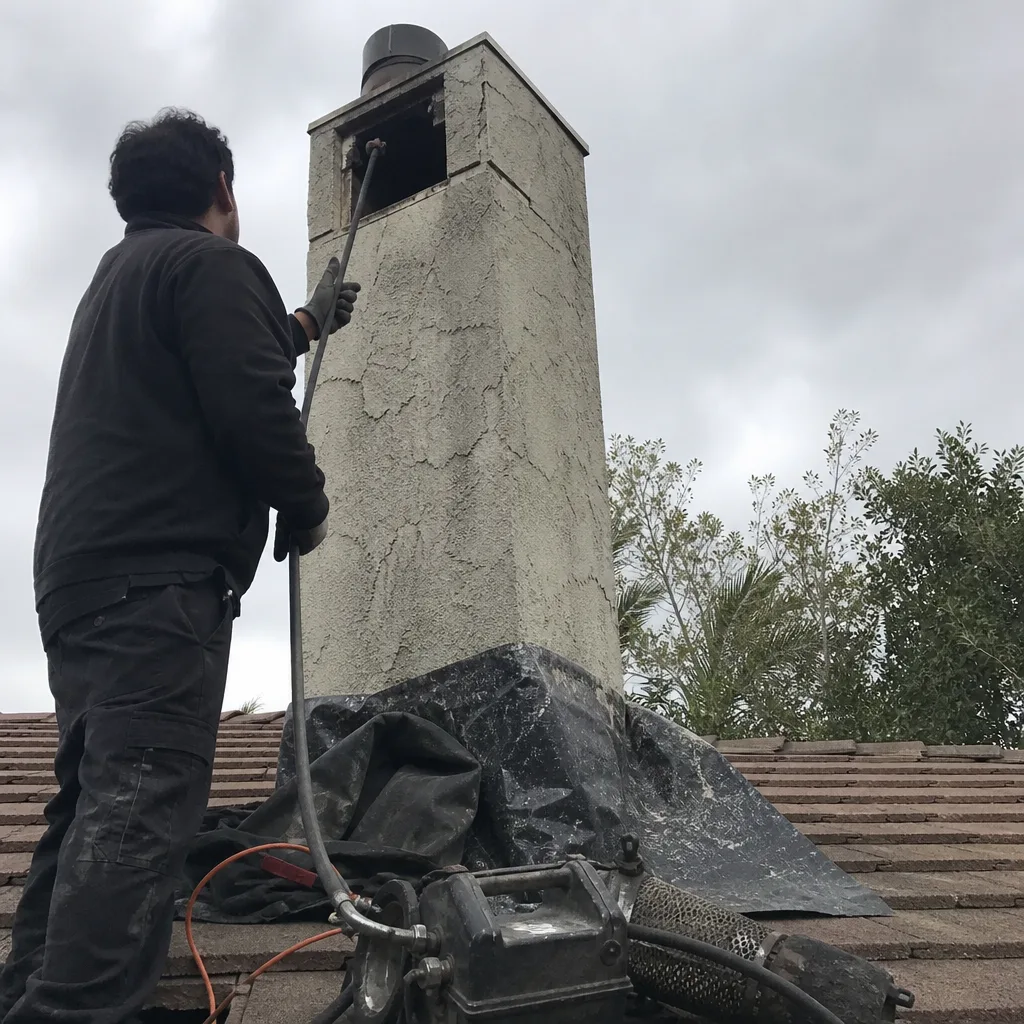 Before
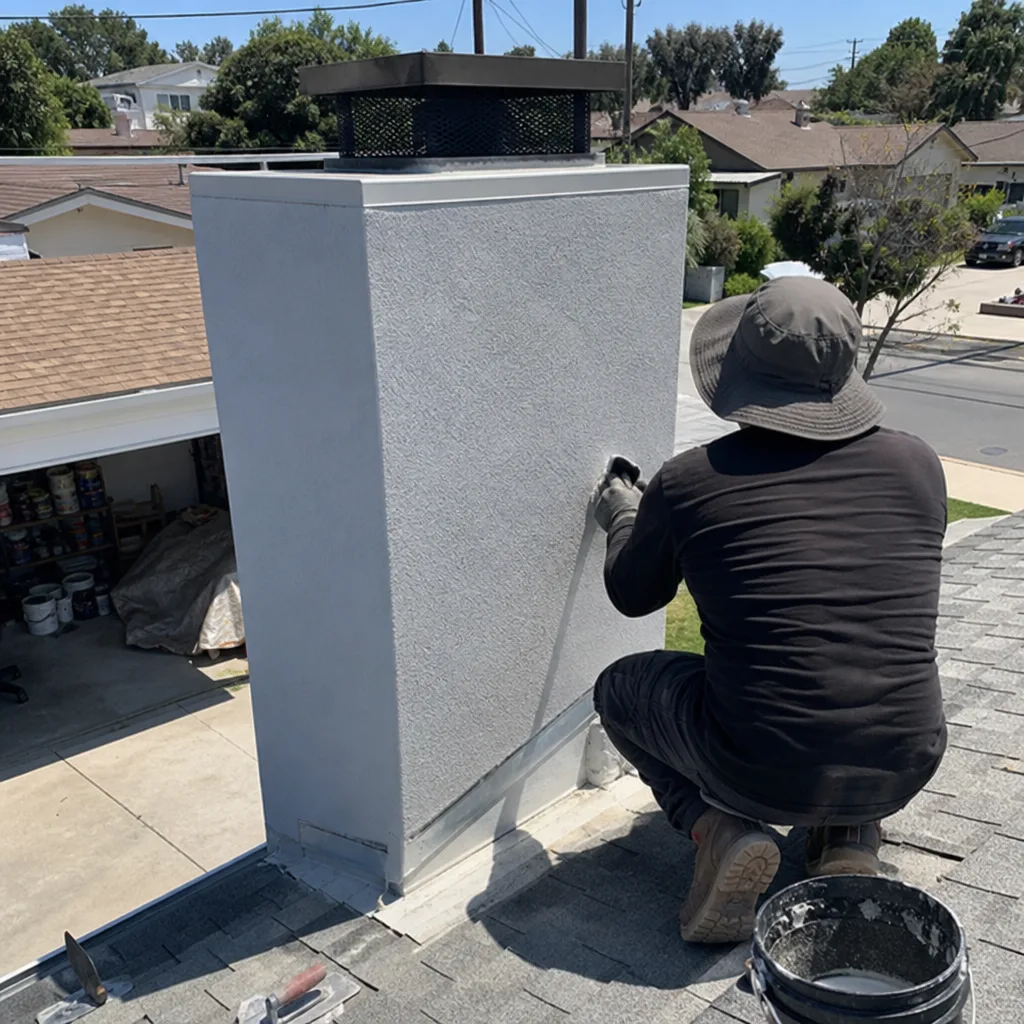 After
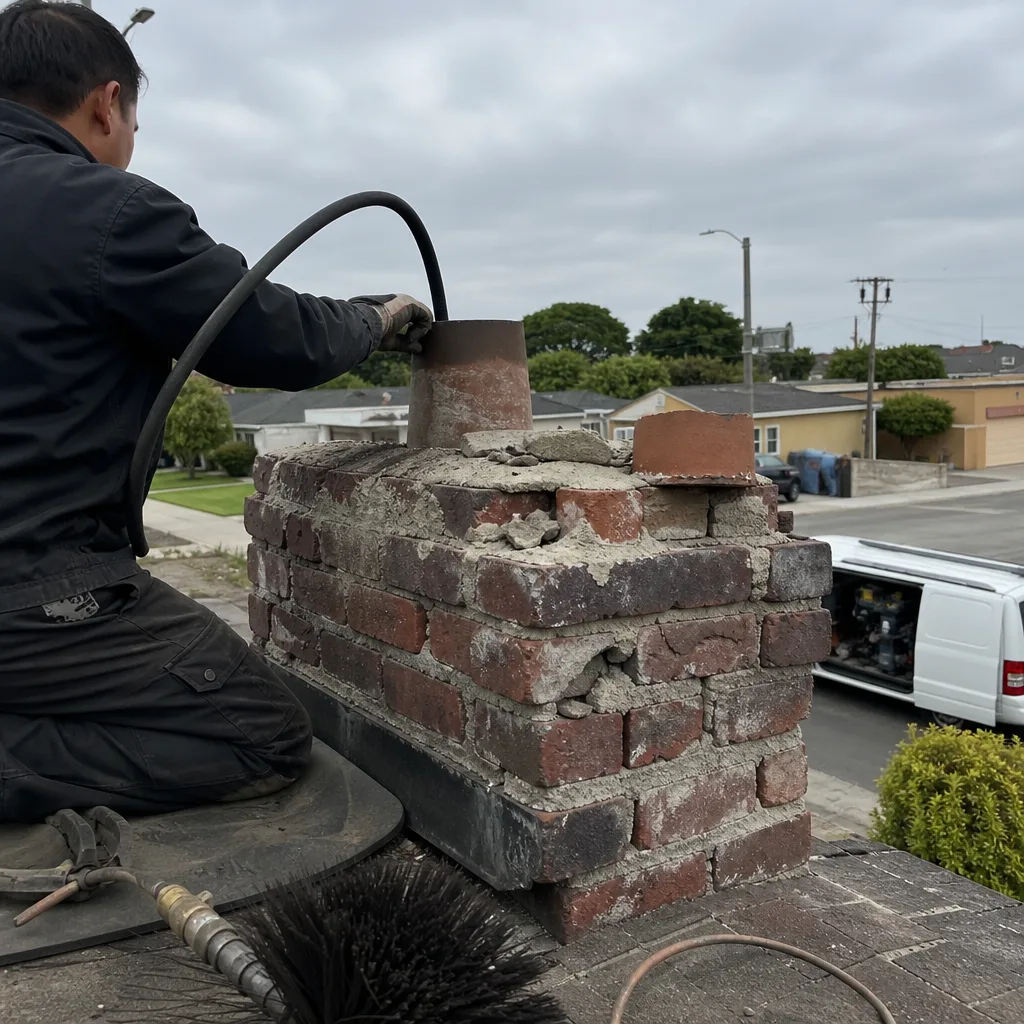 Before
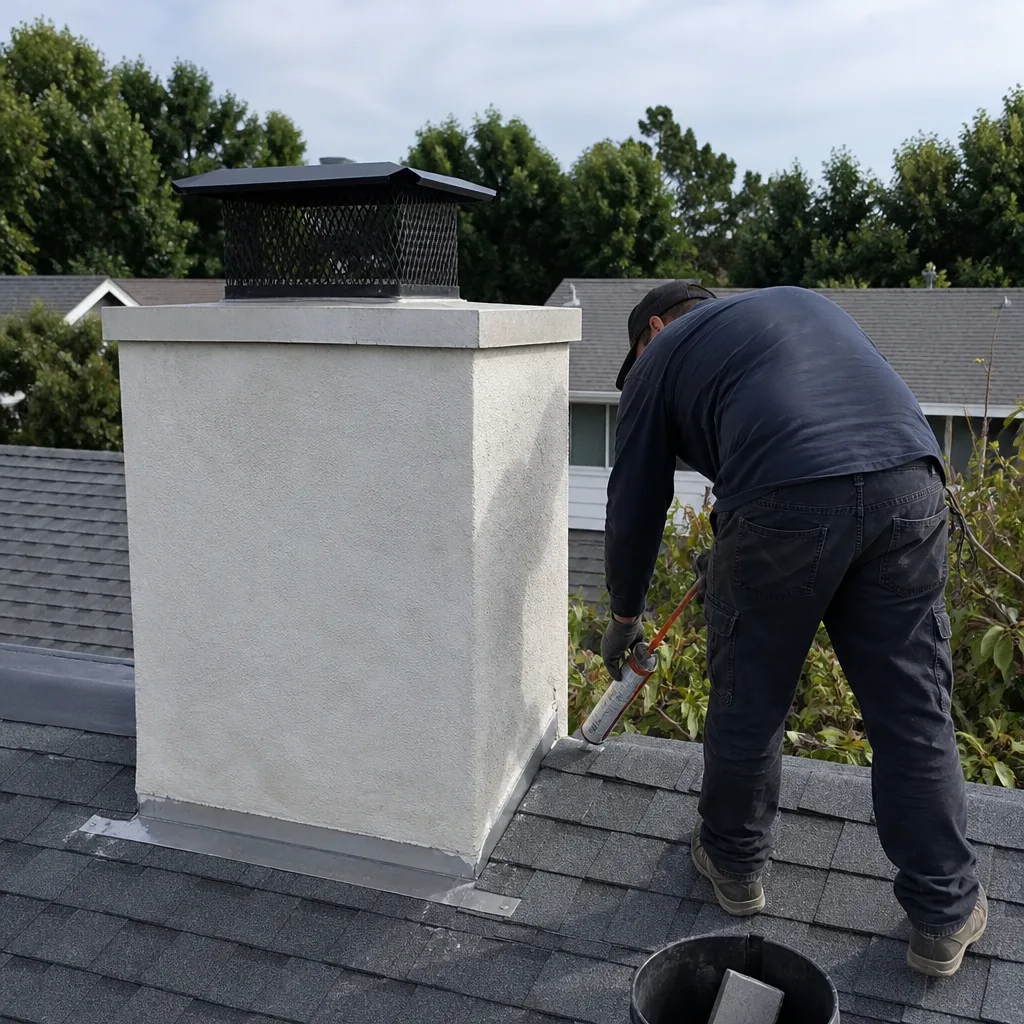 After
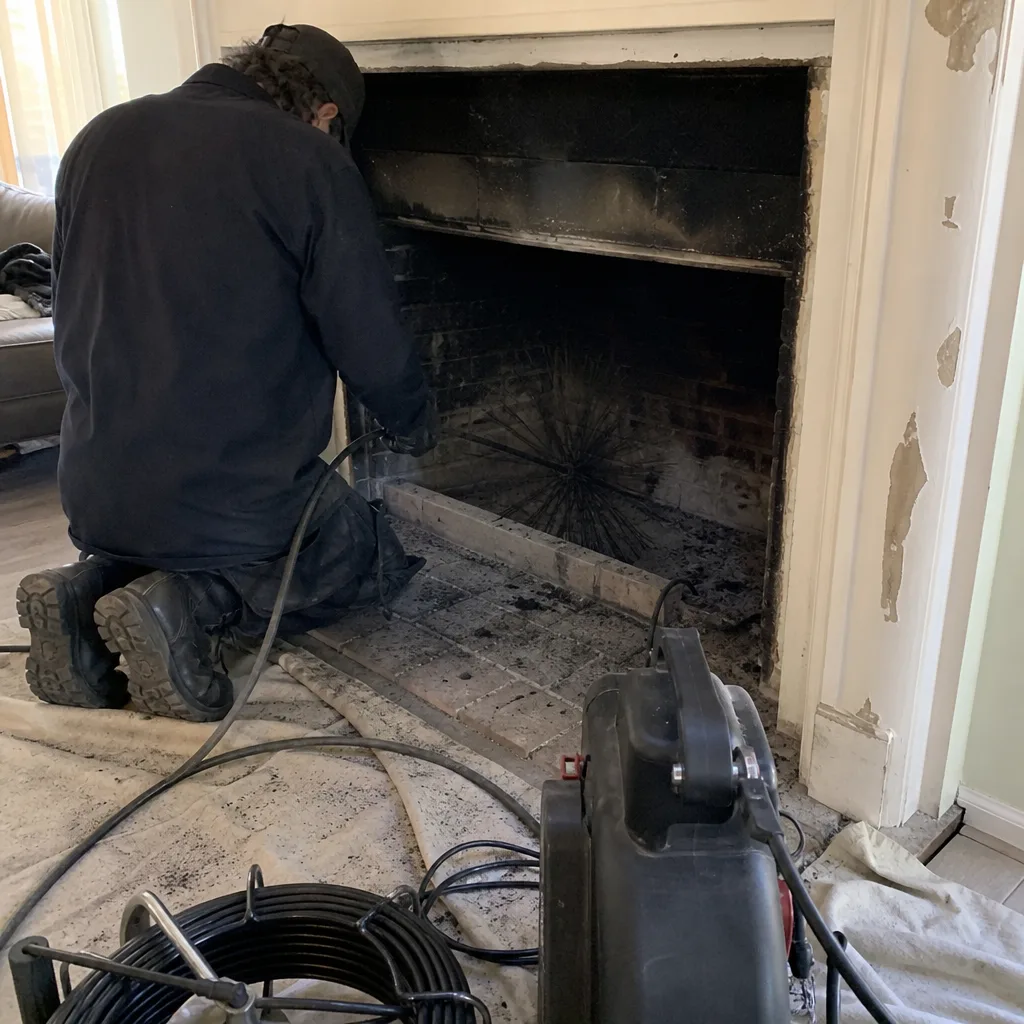 Before
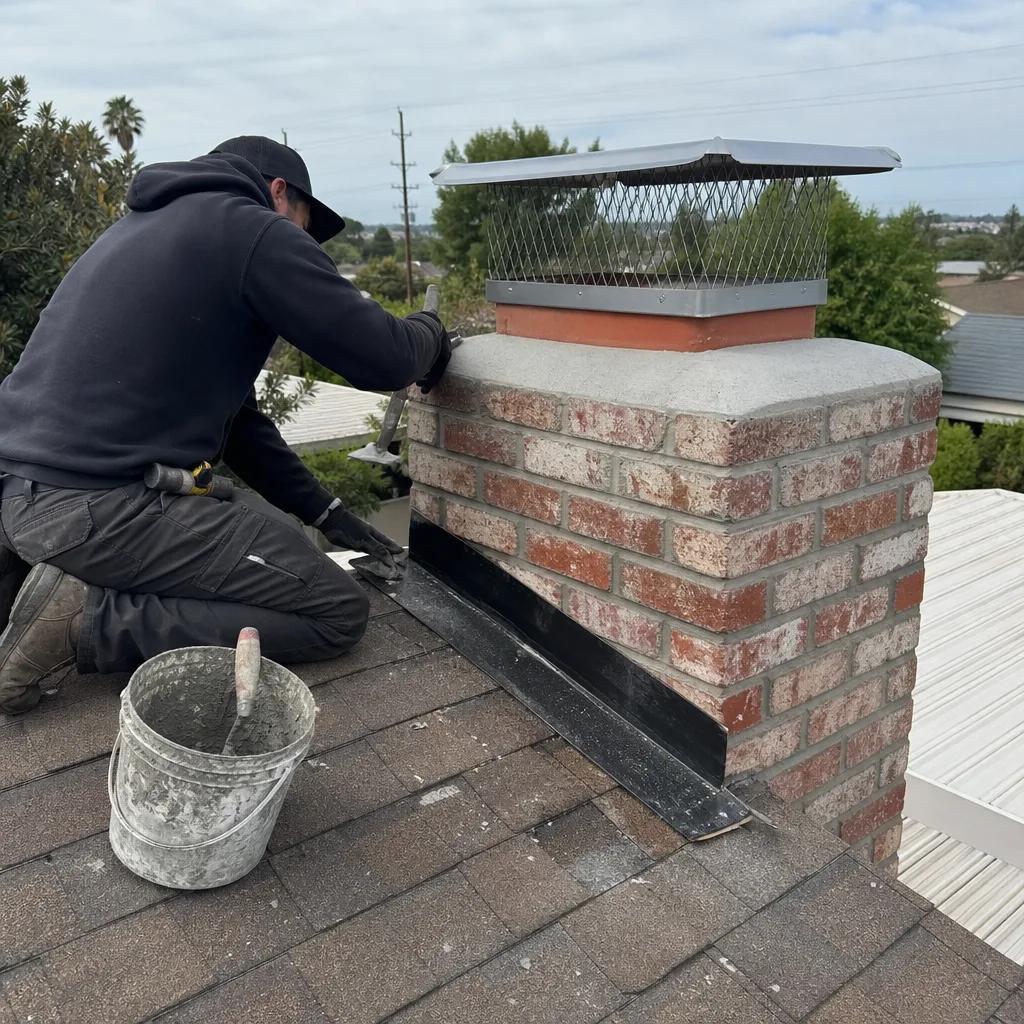 After