
Last updated November 2, 2026
 Sweep & inspection
 Caps & crowns
 Flue relining
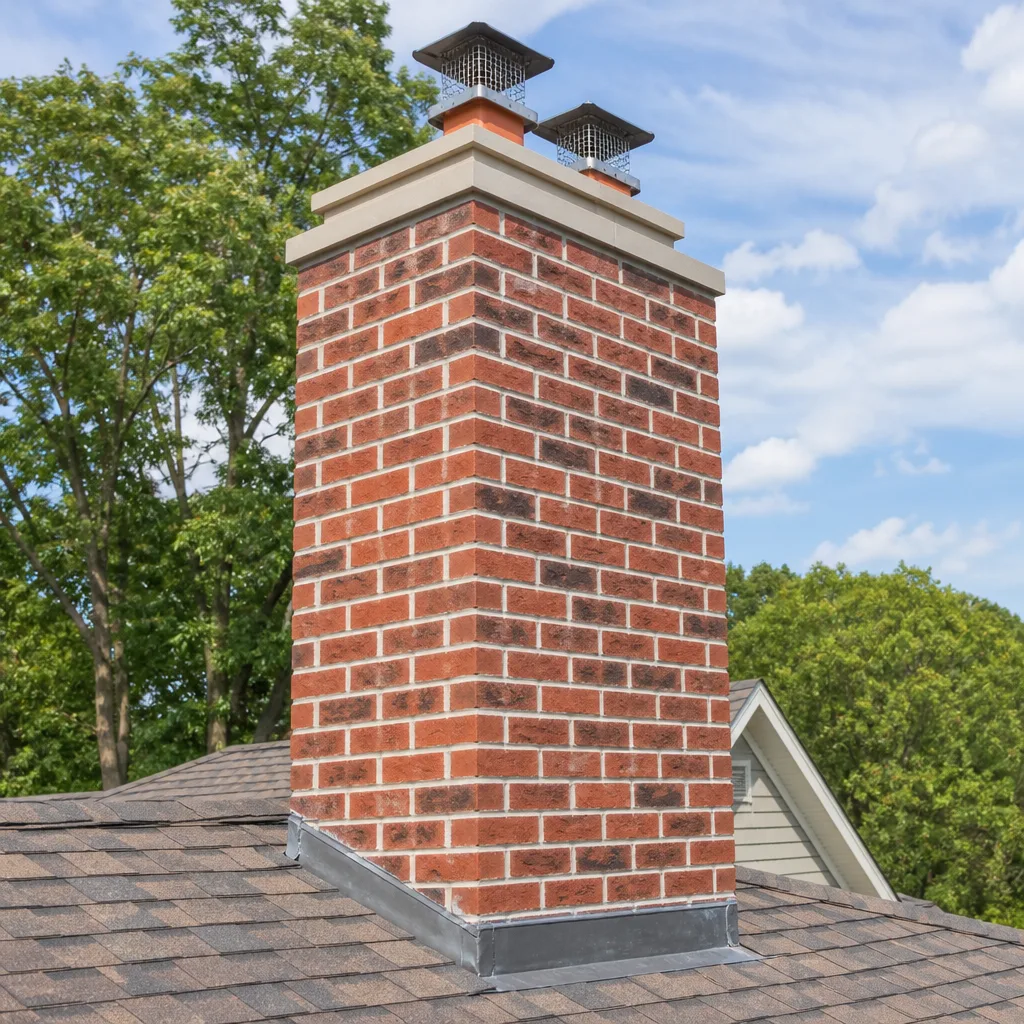 Masonry repair
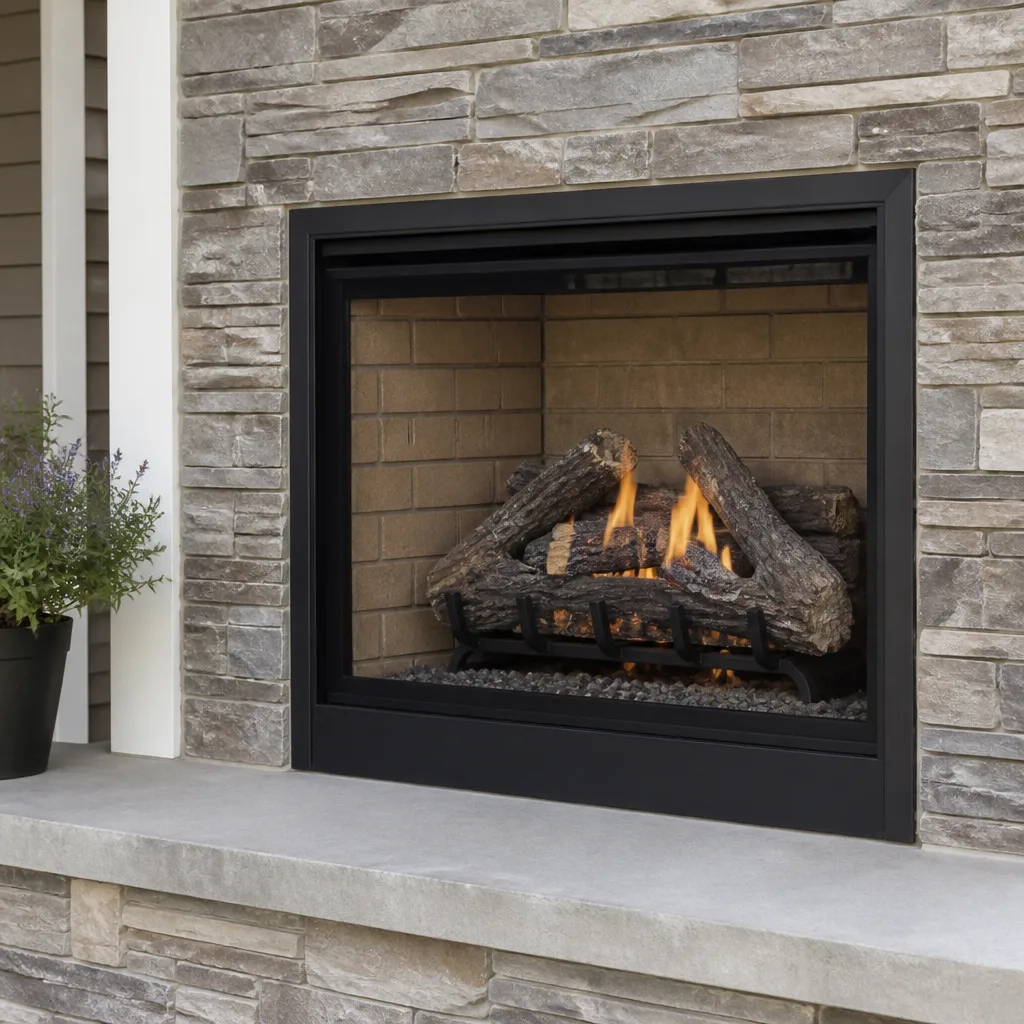 Gas fireplace service
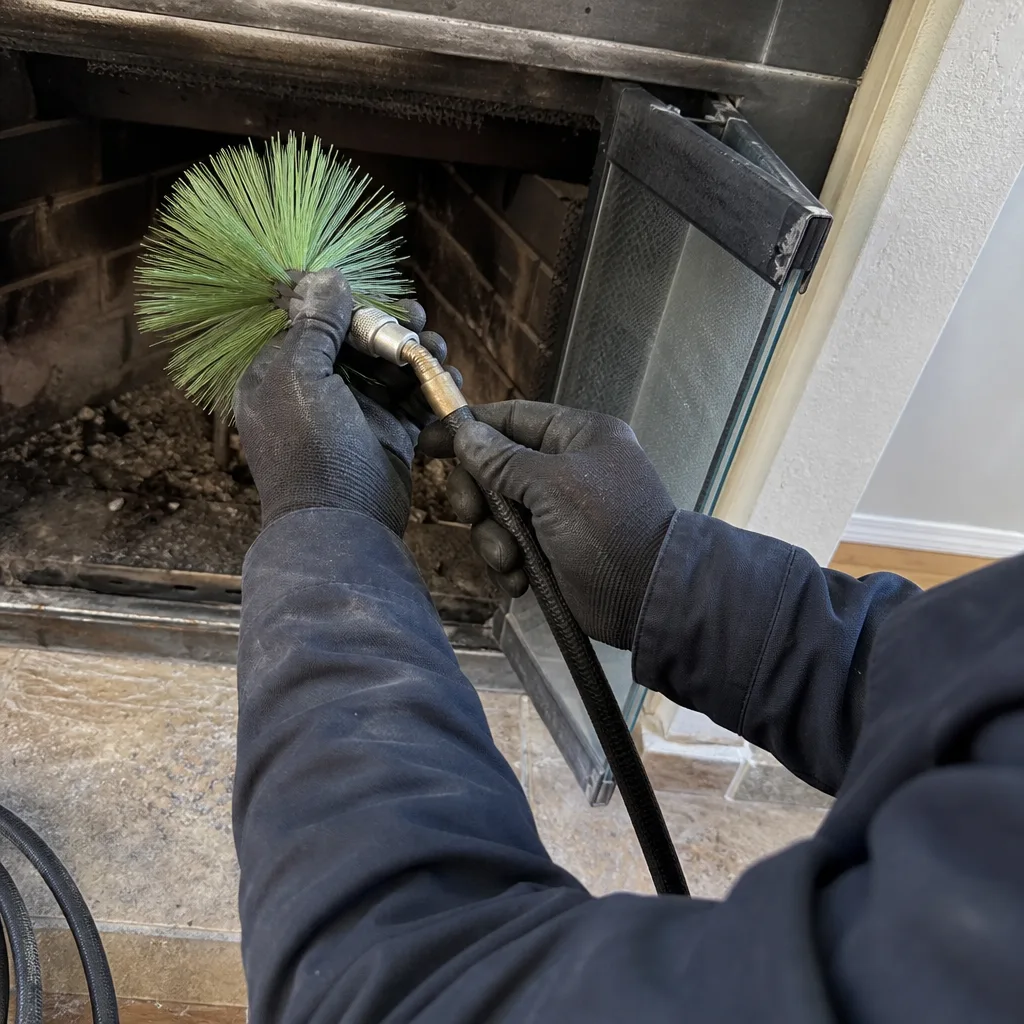
Level 1 sweep and inspection to the NFPA 211 annual standard - flue, crown, cap, and flashing checked and photographed
Chimney sweep logs do not sweep chimneys. They loosen some creosote - which then falls where a brush and vacuum still have to collect it.
Chimney Sweep Maintenance Checklist for Carson Homeowners
The CSIA recommends an annual chimney inspection, but the checklist a homeowner uses between professional visits is what separates catching a cracked firebox tile early from discovering it after smoke rolls back into the living room. Here’s the problem with most checklists you’ll find online: they were written for wood-burning households in Ohio or Michigan. Carson isn’t the Midwest. Our coastal air, mild winters, and mixed fuel types create failure patterns that a generic list never addresses. This guide gives you a task-by-task maintenance schedule calibrated to what actually fails in Carson chimneys, keyed to your specific appliance type, and organized by how often each check matters.
Quick Answer
A Carson chimney maintenance checklist should include monthly visual checks of the firebox and damper during burn season, seasonal checks of the exterior cap and crown, and an annual professional inspection. Gas appliances need different checks than wood-burning ones, and coastal salt air means Carson homeowners should inspect cap flashing and stucco chase exteriors more often than inland residents. The single most important item: photograph your firebox and cap once a year so you have a comparison baseline when something looks off.
Styles & brands we work with
- Sweep & inspection
- Caps & crowns
- Flue relining
- Masonry repair
- Gas fireplace service
Table of Contents
- Why Carson Is Different: Climate, Fuel, and What Actually Fails Here
- Wood-Burning Masonry Chimney Maintenance Checklist
- Prefab Wood-Burning Fireplace Maintenance Checklist
- Gas Insert and Gas Log Set Maintenance Checklist
- Coastal-Specific Checklist Items for Carson Homes
- Frequency Schedule: Each Use, Seasonal, and Annual
- What a Professional Inspection Covers (And Why Your Eyes Aren’t Enough)
- The Documentation Habit: Photograph Your Firebox and Cap
- Common Mistakes to Avoid
- When to Call a Professional
- Frequently Asked Questions
- The Bottom Line
Why Carson Is Different: Climate, Fuel, and What Actually Fails Here
Carson sits in the South Bay, a few miles from the Pacific. That proximity to salt air and marine layer moisture changes how chimney systems age. The stucco chase on a prefab fireplace absorbs moisture differently here than in the high desert, and the cap flashing that holds up fine in Torrance or Long Beach can start showing rust through in a handful of years because of the salt content in the air. We see this on jobs all over Carson: the crown wash on a masonry chimney will develop hairline cracks from seasonal moisture expansion, and those cracks let water into the flue system long before any interior symptom shows up.
Fuel type matters just as much. A lot of Carson homes, especially those built in the 1950s through 1970s, originally had wood-burning masonry fireplaces. Many of those have been converted to gas log sets or gas inserts. Others are still wood-burning but get used maybe ten or fifteen times a year, usually between Thanksgiving and February. A sporadic burn schedule creates a different problem than daily use: creosote builds up in thin layers that harden and become harder to remove, rather than accumulating as fluffy soot that a brush handles quickly. The checklist you need depends on which system you actually have, not which one the previous owner installed.
One more Carson-specific factor: older neighborhoods like Carson Park or Dominguez have a lot of chimneys that were built before modern flue liner standards. If your fireplace is original to a house built before 1960, the clay tile liner has been in service for over 60 years. That’s not automatically a problem, but it means your annual check should include liner condition questions that a newer prefab unit won’t require. The Chimney Sweep Carson home page covers how we approach these older systems.
Wood-Burning Masonry Chimney Maintenance Checklist
If your Carson home has a true masonry chimney, meaning brick or block construction with a clay tile liner, here’s what you can check yourself and when. A masonry chimney is the most durable system you can have, but it’s also the one with the most distinct failure points because every component, from the cap to the firebox, is made of different materials that expand and contract at different rates.
Inside the Firebox (Check Each Burn Season)
- Firebox brick or refractory panel condition: Look for cracked, spalled, or missing bricks. A hairline crack in a firebox brick is the earliest warning sign that heat has been stressing the masonry. In Carson’s climate, moisture intrusion through the crown accelerates this by introducing water into the brick, which then expands when heated.
- Damper operation: Open and close the damper fully. It should move smoothly and seat completely when closed. A damper that won’t close all the way is a route for conditioned air to escape in summer and for moisture to enter in winter.
- Ash depth: Once ash accumulates beyond about two inches in the firebox, it reduces your fire’s airflow and pushes heat toward the back wall. Remove ash when it exceeds that depth, but leave a thin layer (about a half inch) to protect the firebox floor from direct heat.
- Glass door gaskets (if equipped): Run your finger along the gasket where the door seals. A gasket that feels brittle, compressed flat, or is peeling away from the door frame needs replacement. The primary air control on a door-equipped fireplace depends on that seal.
Visible Smoke Chamber and Damper Housing (Annually)
You can’t see the full smoke chamber from inside the house, but you can often see the first few inches above the damper with a flashlight. What you’re looking for is creosote accumulation. If you see any glossy, tar-like deposit, that’s third-degree creosote and it’s the most dangerous form because it’s concentrated fuel. If you see it, stop using the fireplace and schedule a sweep. If all you see is a light gray or brown dusting, that’s normal for a season of occasional burning.
We recommend a professional chimney sweep in Carson when the flue hasn’t been cleaned in 18 months or more, even if the visible deposits look minor. What you can see from the fireplace opening represents maybe ten percent of the total flue surface area.
Prefab Wood-Burning Fireplace Maintenance Checklist
Prefab, factory-built fireplaces are common in Carson homes built after about 1980. These units have metal fireboxes, metal flue pipes, and a completely different failure profile than masonry. The critical thing to understand: a prefab fireplace has a service life. Most manufacturers rate their fireboxes for 20 to 30 years of use. If your Carson home still has its original prefab from 1985, you are beyond the design service life and need to be checking for signs of metal fatigue.
- Inspect the refractory panels inside the firebox. These are the ceramic panels that line the metal box. Look for cracks wider than a quarter inch, panels that have shifted out of position, or screws that have pulled through the panel. When a panel fails, heat reaches the metal firebox shell directly, and the shell was never designed to take that heat bare.
- Check the flue pipe connection at the top of the firebox. Use a flashlight to look up past the damper. The first section of flue pipe should be seated securely into the firebox collar. If you see daylight around the seam, or rust staining on the pipe, that’s a ventilation problem and a moisture entry point.
- Look for rust on the firebox floor and walls. Surface rust is expected in a prefab that’s twenty years old. What isn’t normal is rust that flakes off in sheets or pinholes that go through the metal. A pinhole in the firebox floor means heat and combustion gases are reaching the framing beneath the fireplace. That’s a stop-use condition.
- Verify the manufacturer’s rating plate. It’s usually on a metal tag riveted inside the firebox opening or accessible through the lower grill. The tag tells you the model, the clearance requirements, and what fuels are approved. If the tag is missing or unreadable, you should treat the unit as unlisted. An unlisted fireplace is one an insurance adjuster will use to deny a claim if it causes a fire.
When a prefab firebox reaches the end of its service life, there’s no repair. The unit gets replaced. If the flue pipe is still in good shape, you may be able to reuse it, but the firebox itself cannot be patched with refractory cement, despite what some YouTube videos suggest. That patch will fail under the first sustained burn, and the failure happens where you can’t see it.
Gas Insert and Gas Log Set Maintenance Checklist
Gas appliances need a fundamentally different checklist. There’s no creosote to worry about, but there are burners to inspect, gas connections to verify, and venting systems that corrode in Carson’s salt air. A gas fireplace that runs improperly can produce carbon monoxide, and unlike a wood fire that gives you visible smoke as a warning, a gas burner producing CO gives you nothing to see or smell. This is why the gas checklist is more about precision than glance-and-go.
- Inspect the burner and burner ports monthly during the season you use the appliance. The burner should produce an even flame pattern, mostly blue with yellow tips if you have a realistic log set. If you see lazy yellow flames, sooting on the logs, or flames that lift off the burner ports unevenly, the air-to-gas ratio is off and the unit needs service.
- Check for soot accumulation on the logs before each season. A properly burning gas log set won’t produce soot. If you see black carbon buildup on the ceramic logs, something is wrong with the burner or the gas pressure, and the soot itself is a sign the unit is producing incomplete combustion byproducts.
- Verify the vent termination on the exterior wall. Most gas inserts in Carson vent through a side wall or a direct-vent pipe up through the roof. Check the termination cap for blockage: bird nests in spring, spider webs year-round, and foliage that grows over the cap. A blocked termination doesn’t just mean the appliance won’t draft. It means combustion gases are backing up into the home.
- Test the carbon monoxide detector in the same room. This is a maintenance checklist item that belongs alongside any gas appliance. A CO detector with a dead battery is worse than no detector because it gives false confidence. Test it monthly during burn season and replace batteries annually.
- Check the glass gasket on a sealed gas insert. The glass should seal firmly against the gasket. If you see fogging between the glass panes, the seal has failed and combustion gases are leaking into the room. The glass needs to be re-gasketed by a professional, not just wiped down.
If you have a gas appliance in Carson and haven’t had the burner and venting inspected in more than two years, schedule that before the next burn season. The service area we cover for dryer vents is the same area where we find gas fireplace venting problems, and the patterns are similar: neglect until a symptom appears.
Coastal-Specific Checklist Items for Carson Homes
Carson sits close enough to the coast that marine air reaches most of the city, especially neighborhoods west of the 110. The salt content in that air is lower than what Long Beach or San Pedro gets directly on the water, but it’s high enough to accelerate corrosion on any metal component of a chimney system. Here are the items that Carson homeowners need to check that someone inland can mostly ignore.
Stucco Chase and Efflorescence
Most prefab fireplaces in Carson run flue pipe through a wood-framed chase covered in stucco. The stucco is the weather barrier for the entire chase, and when it starts absorbing moisture, the first sign is efflorescence: that white, chalky mineral deposit that appears on the stucco surface. Efflorescence means water is moving through the stucco and carrying salts with it. It’s not just cosmetic. It tells you the stucco has become porous, and moisture is traveling toward the framing inside the chase. In Carson’s marine layer, this happens faster than in Pasadena or Whittier because the stucco never fully dries out between fog events.
Cap Flashing Deterioration
The metal flashing where the chimney meets the roof is steel or galvanized metal on most Carson homes. Salt air corrodes the galvanized coating, and once the coating is compromised, the steel underneath rusts through quickly. Walk around your house and look at the chimney from the ground. If you can see rust staining on the flashing, it’s actively corroding and needs replacement. You can’t see the full flashing condition from the ground, but rust stains visible from twenty feet away mean the flashing is already losing its seal.
Crown Wash Cracking
The crown wash is the concrete surface that covers the top of a masonry chimney. It’s sloped to shed water away from the flue opening. In Carson, the crown expands slightly with daytime warmth and contracts at night, and over years that thermal cycling opens hairline cracks. A crack in the crown wash lets water penetrate into the brick structure below it, which then causes spalling and liner damage. This is one of the easiest and cheapest items to fix early and one of the most expensive to fix late.
For a professional assessment of any of these issues, our chimney repair service in Carson covers crown rebuilding, flashing replacement, and stucco chase sealing.
Frequency Schedule: Each Use, Seasonal, and Annual
A checklist is only useful if you know when to run through it. Here’s how to organize the items by frequency, so you’re not trying to remember everything at once.
Each Use (Before Lighting a Fire)
- Confirm the damper is fully open.
- Visually scan the firebox for anything that shouldn’t be there: debris, animal nesting material, children’s toys, or accumulated ash that blocks the grate.
- For gas, confirm the burner area is clear of decorations or fallen ceramic embers.
- If it’s the first fire of the season, check that the carbon monoxide detector is functional.
Each Season (Start of Burn Season in Fall)
- Run the full visual checklist for your appliance type (above).
- Check the exterior cap and crown from the ground with binoculars if you have them.
- Operate the damper through its full range to confirm smooth function.
- Photograph the firebox and the exterior cap for your annual comparison file.
- Check any glass doors or gaskets for seal quality.
Annually (Before Burn Season, Every Year)
- Schedule a professional inspection and sweep. Even if you’ve only burned five times, the inspection catches issues that don’t produce visible symptoms indoors.
- Have the flue liner assessed, either visually or with a camera depending on what the inspection reveals.
- Check all exterior flashing, crown wash, and stucco chase conditions in detail.
- For gas appliances, verify vent termination caps are clear and the burner is producing a proper flame pattern.
- Update your photo baseline with new images that match the angles and framing from last year.
See the difference
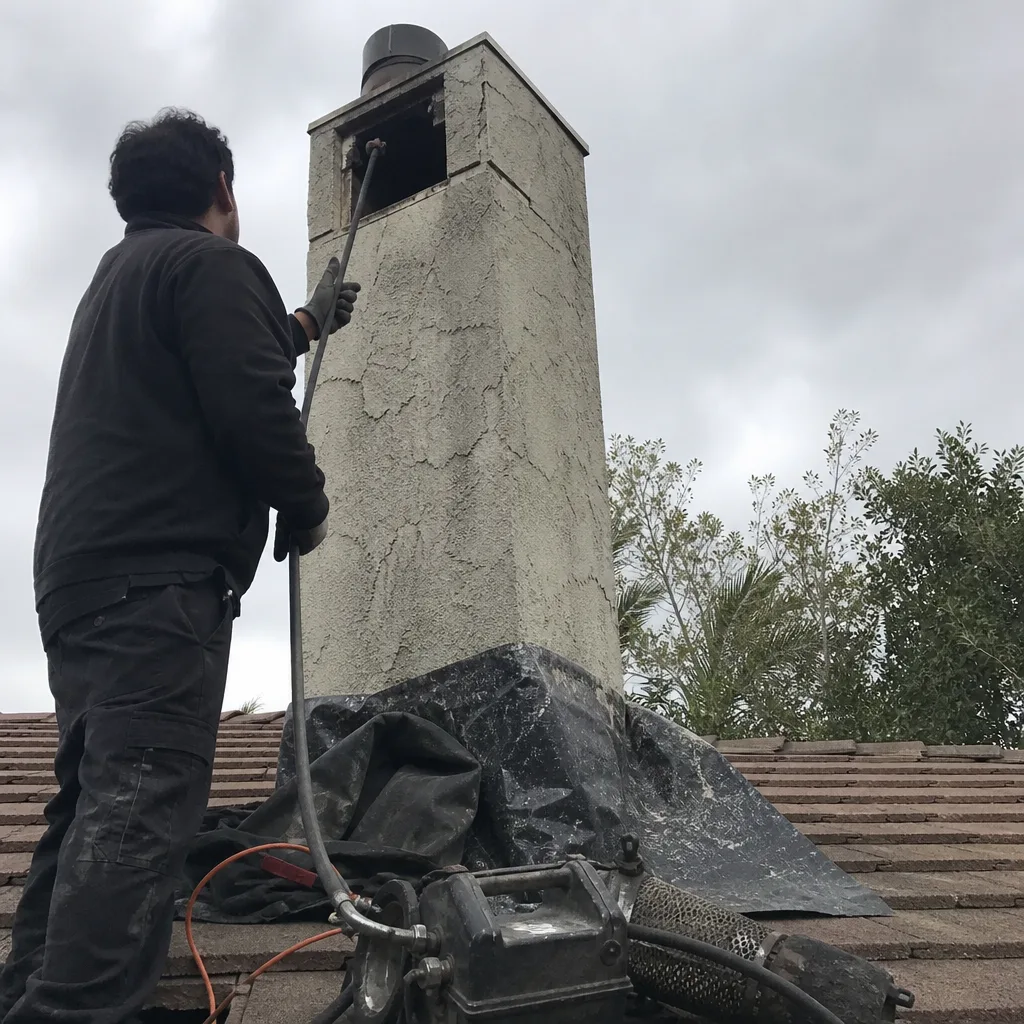 Before
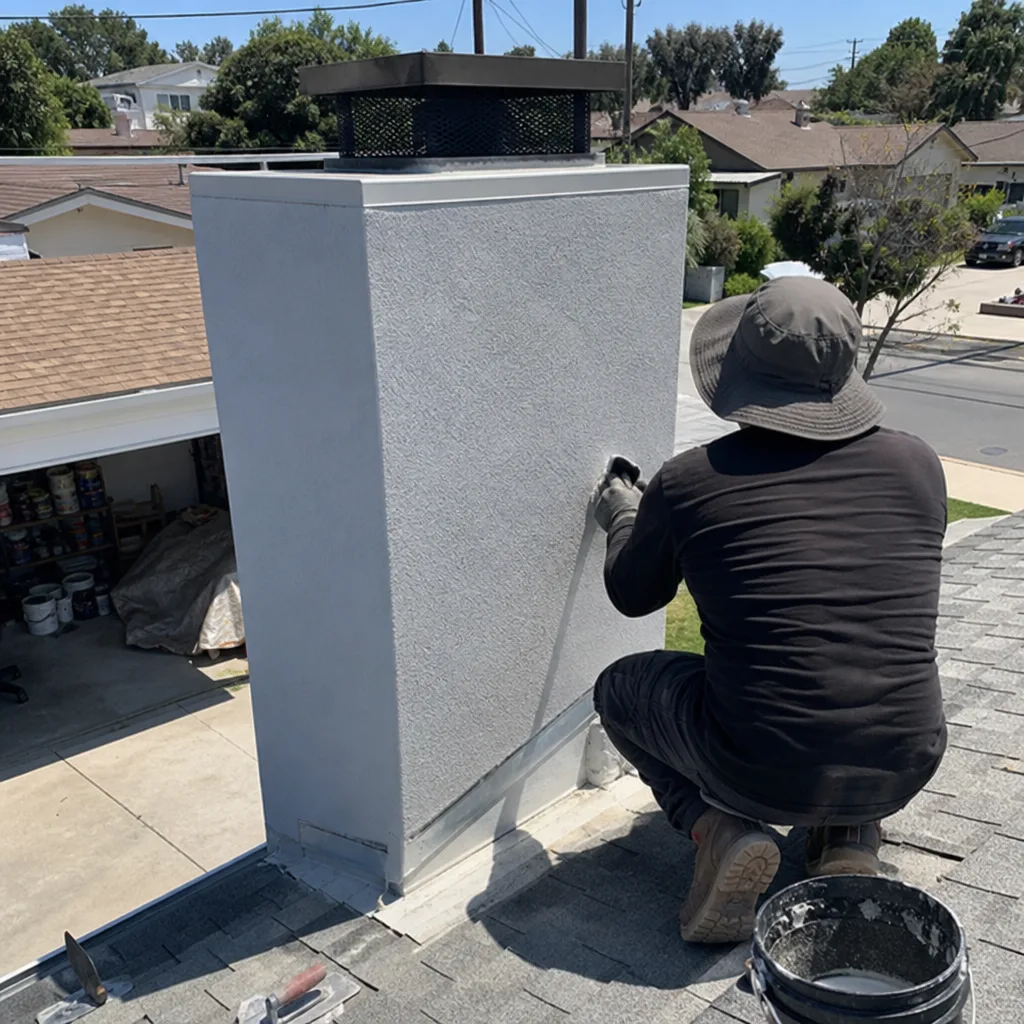 After
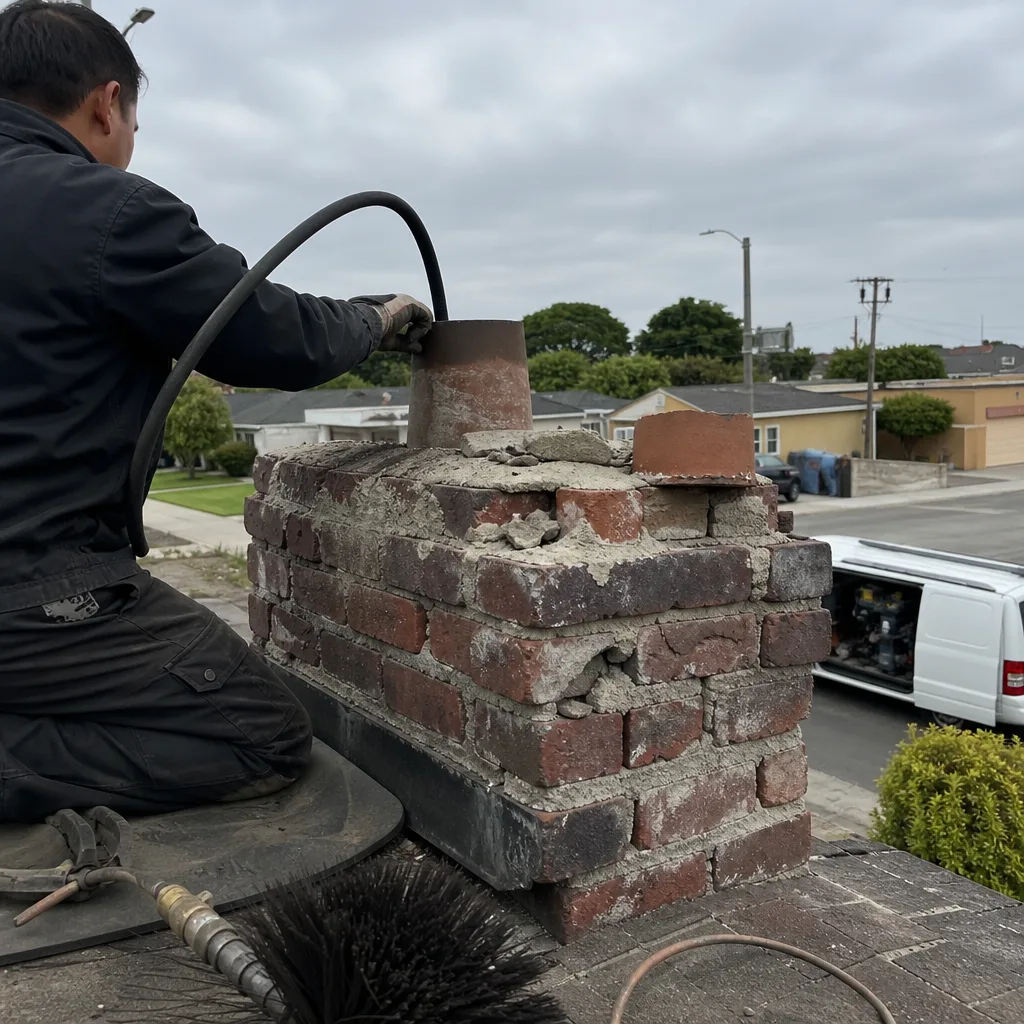 Before
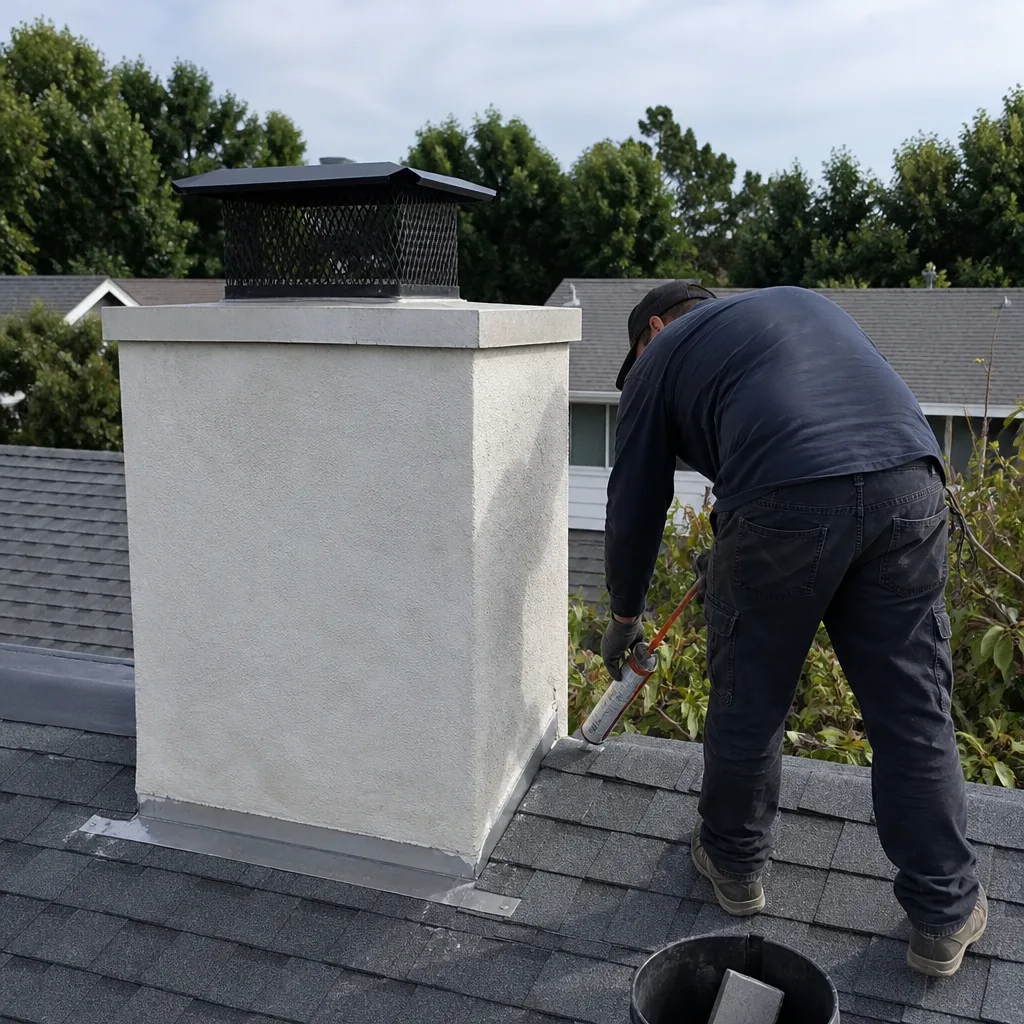 After
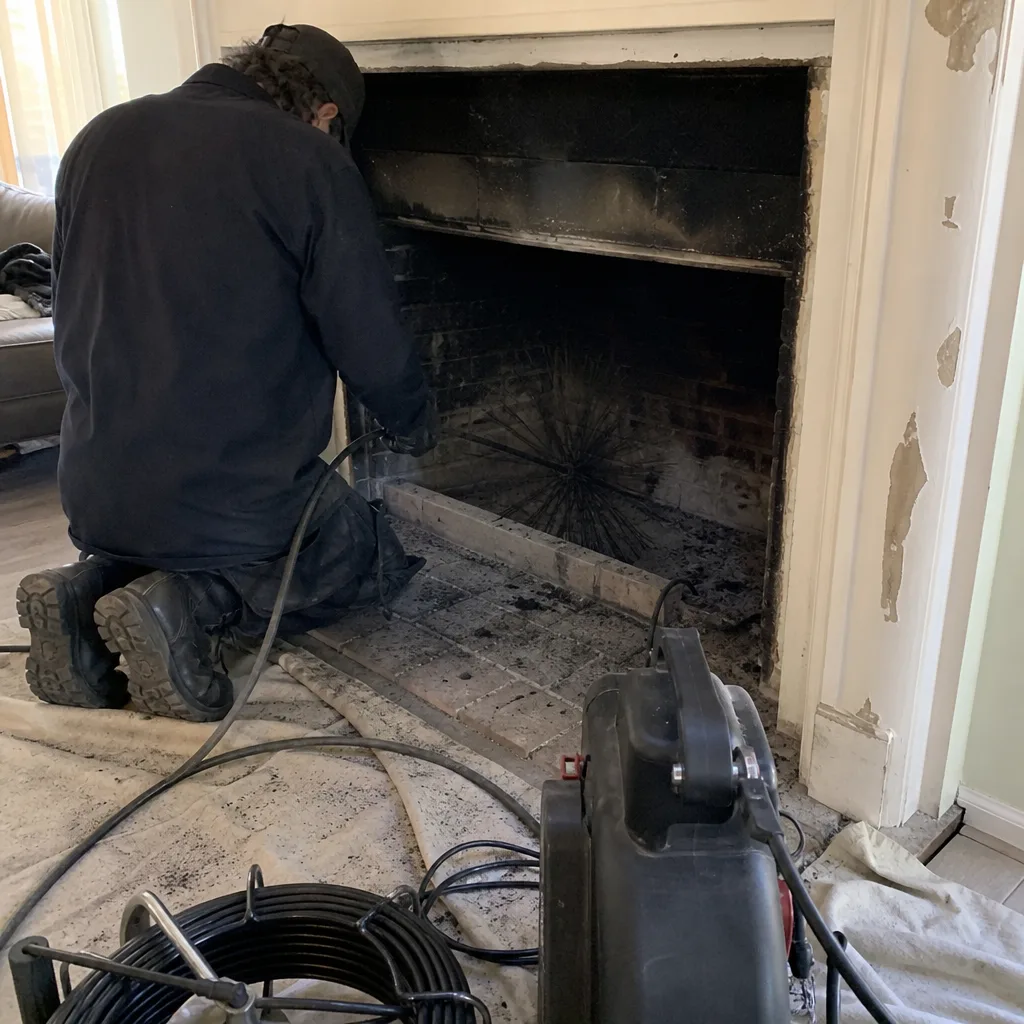 Before
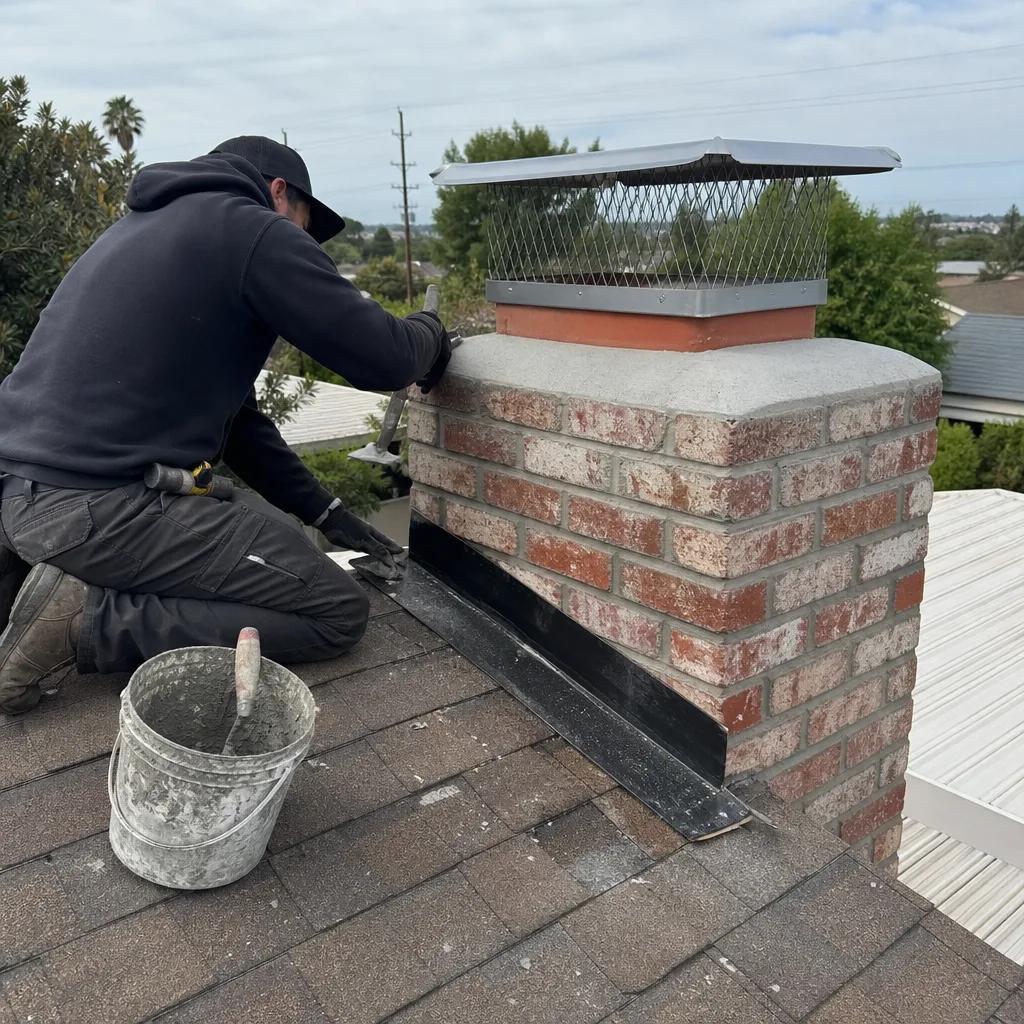 After
What a Professional Inspection Covers (And Why Your Eyes Aren’t Enough)
You can see maybe ten percent of a chimney system from inside the house. The full flue, from the firebox to the cap, is a vertical shaft that your eye can’t navigate, and a flashlight doesn’t help much beyond the first few feet. That’s why a professional chimney sweep in Carson uses a camera inspection system that records the interior condition of the flue liner in detail. What the camera sees is what determines whether you have a clean bill of health or a condition that needs repair.
Our inspection process covers:
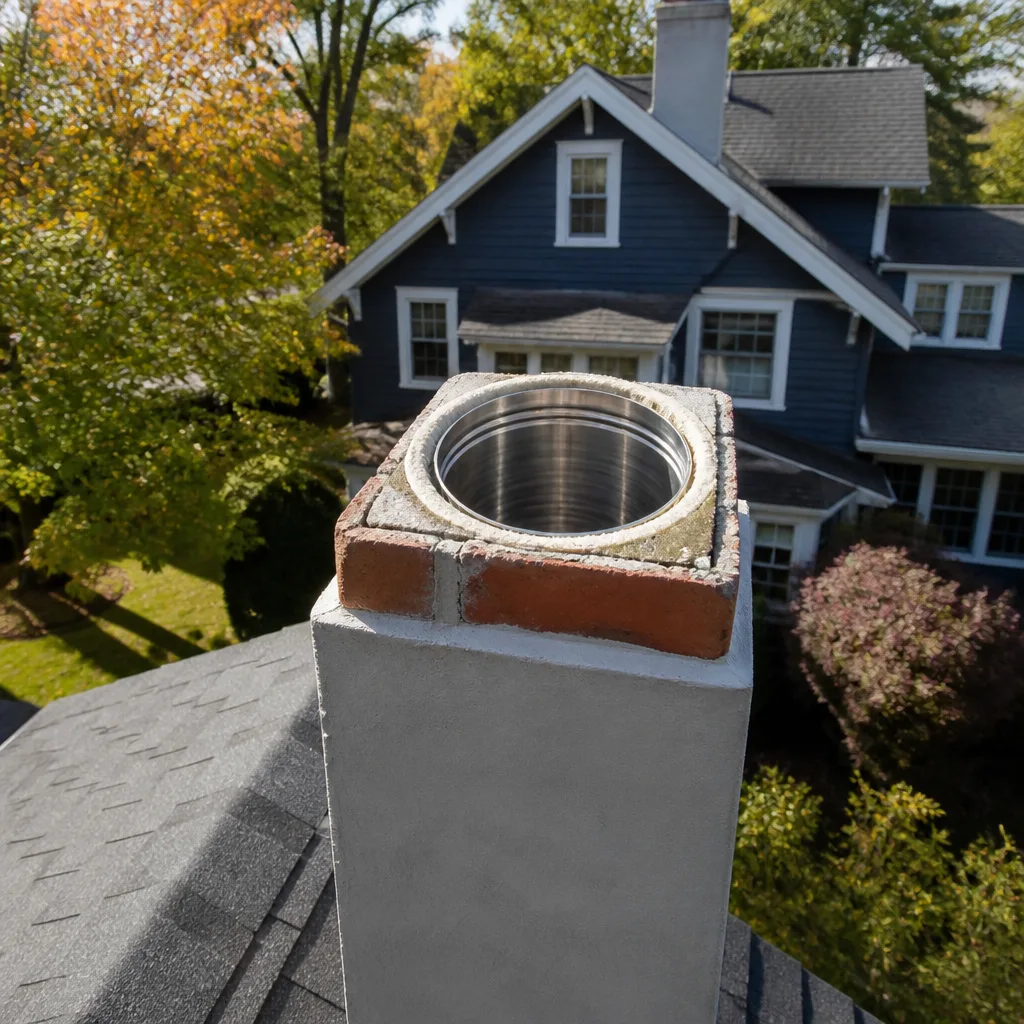
- Flue liner condition: Cracked clay tiles, gaps between tile sections, or spalled liner material that indicates heat damage or moisture intrusion. If the liner has failed, options include relining with DuraFlex stainless steel or restoring the existing liner with HeatShield ceramic resurfacing, depending on the specific failure mode.
- Smoke chamber integrity: The smoke chamber is the transition space between the firebox and the flue. The brick here gets exposed to the hottest gases, and over time the mortar can degrade and create gaps where creosote accumulates and heat can escape into the surrounding structure. This is a common finding in Carson homes from the 1950s and 1960s.
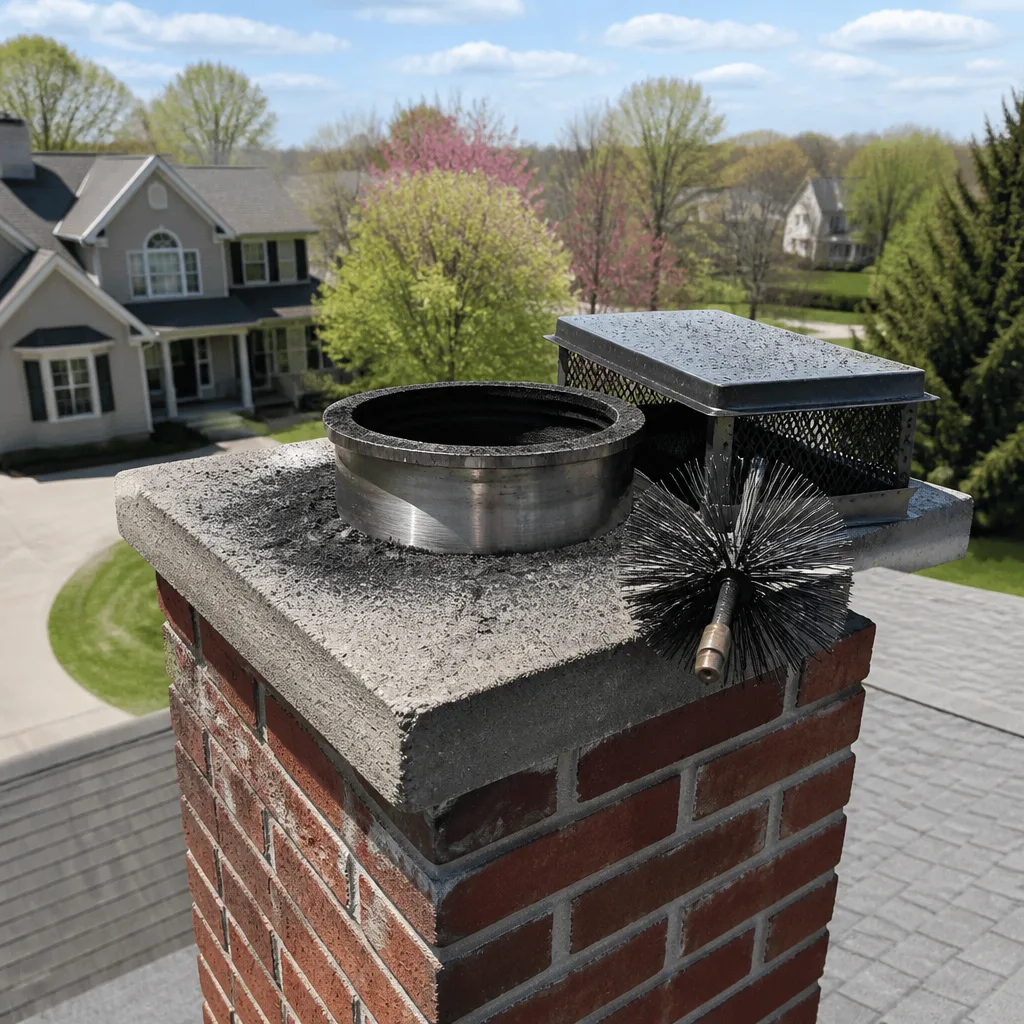
- Flashings and roof penetration: The seal where the chimney passes through the roof is a leading water intrusion point. Our team checks the flashing, the storm collar, and the cap seal from the roof side, which is something you just can’t do safely or effectively from the ground.
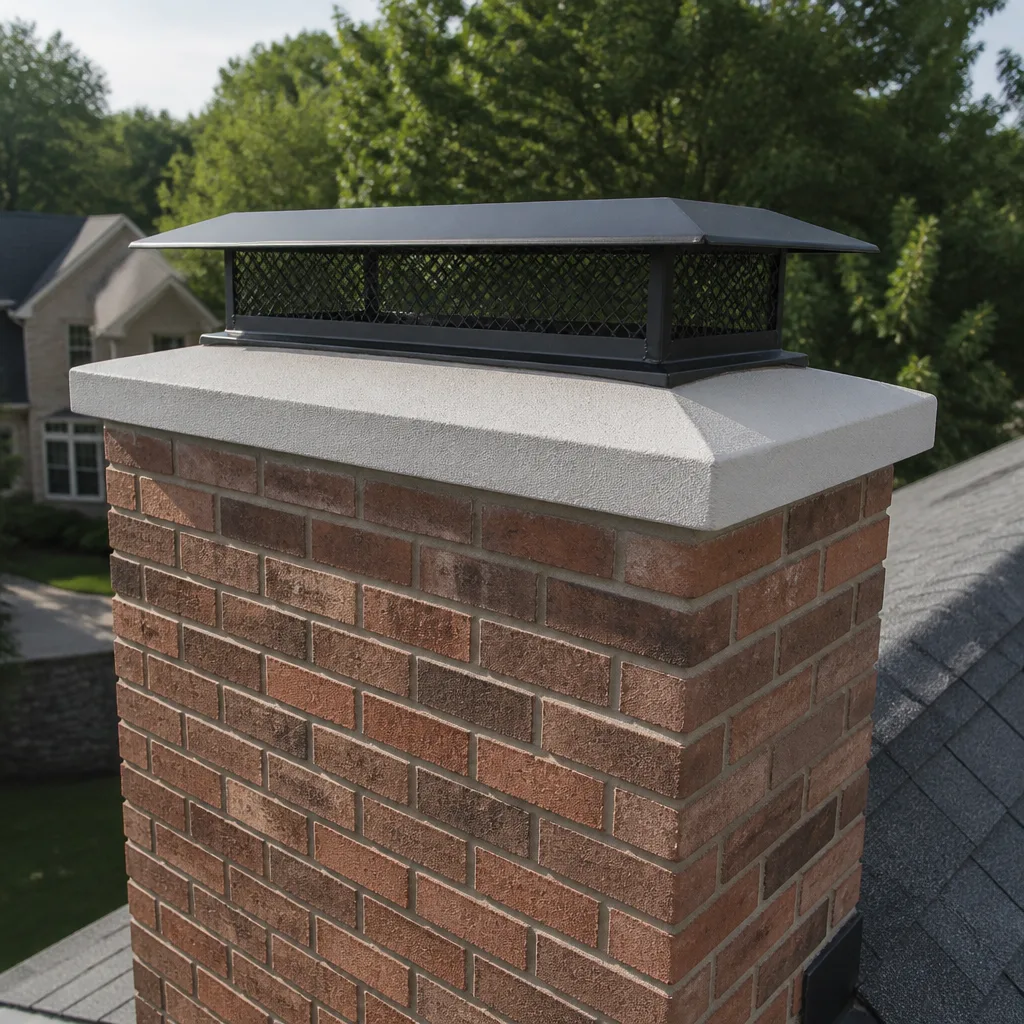
- Chimney cap condition: A missing or damaged cap lets rain, birds, and debris into the flue. In Carson, the cap is also the first metal component to show salt air corrosion. We check it every visit and recommend replacement when it’s compromised.
- Exterior masonry condition: We assess the crown, the brick or stucco surfaces, and the overall structural condition from the roof level. Early crown cracks and hairline stucco fissures get documented so we can track progression over time.
The point of the professional visit isn’t to sell you repairs. It’s to give you a photographic, documented record of what your chimney looks like on the inside, so that when something changes, we can point to the exact moment it changed and what it looked like before. You can see our full scope on the Chimney Sweep in Carson page.
The Documentation Habit: Photograph Your Firebox and Cap
Here’s a practice that costs nothing and makes both your self-checks and your professional inspections significantly more useful: take photos of your firebox and your chimney cap at the same time every year, from the same positions, and store them in a folder on your phone or computer. This creates a comparison baseline that turns vague recollection into objective evidence.
Why this matters: when you look at your firebox every few weeks during burn season, your eye adjusts to slow changes. A crack that opens a millimeter at a time over two years is nearly invisible to you because you see it frequently. But put a photo from November 2024 next to one from November 2026, and the difference is obvious. The same applies to the cap and crown: early rust staining on flashing looks like nothing in person, but a photo comparison ten months apart shows whether that stain is growing.
Here’s how to do it:
- Pick a consistent date. The first weekend of October, before burn season starts, works well. Or use daylight saving time change as your reminder.
- Use the same camera position each year. For the firebox, stand in the same spot in front of the fireplace and frame the entire opening. For the exterior, shoot from the same location in your yard, ideally with the same zoom level.
- Photograph the full firebox including the damper opening. Get the floor, the side walls, and the back wall in one frame if you can. A second close-up of the back wall where heat stress shows first is worth adding.
- Photograph the cap from at least two angles. If you can shoot from a second-story window, do that. The cap is where rain entry, animal entry, and corrosion all happen, and it’s the component you see least often.
- Label the files with the date. “Firebox-Oct-2025.jpg” is enough. When you share these photos with your chimney sweep during the annual visit, it gives us a reference point for what’s changed and helps us prioritize what needs attention.
This documentation habit is also the reason we provide photo documentation as part of our inspection service. The homeowner and the professional should both have the same visual record. When we install a Copperfield cap or a DuraFlex liner, the before and after photos become part of your file, so there’s never a question about what was done or why.
Common Mistakes to Avoid
- Assuming a gas fireplace doesn’t need maintenance. Gas appliances have moving parts, gaskets, and venting systems that fail. A gas insert in Carson that hasn’t been inspected in five years is as much of a hazard as a dirty wood flue, just in a different way: carbon monoxide instead of chimney fire.
- Cleaning creosote by “building a hot fire” to burn it off. This doesn’t work and creates the exact conditions for a chimney fire: high heat, concentrated creosote, and the airflow to feed a gut fire. Third-degree creosote requires mechanical removal with a rotary cleaning system, not combustion.
- Ignoring the exterior because the fire burns fine. Water damage from a cracked crown or rusted flashing develops silently. By the time you see the water stain on the ceiling near the fireplace, the damage has been accumulating for at least a full year.
- Using the fireplace as a trash incinerator. Burning cardboard, wrapping paper, or scrap wood produces high creosote yield and high heat simultaneously. The flue gets clogged faster, and the fuel load burns hotter than the fireplace was designed for.
- Sealing off a chimney you don’t use without a proper cap system. If you close the damper and never use the fireplace, the flue still needs airflow to prevent moisture accumulation. A sealed chimney without a ventilated cap is a mold and mortar degradation chamber.
- Patching a prefab firebox with refractory cement. We mentioned this earlier, but it bears repeating because it’s one of the most common “fix” we see on YouTube and in old forum threads. Once a prefab box is cracked, the fireplace is done. A patch gives you one more burn before the patch fails, and the failure point is always facing the wood framing.
- Forgetting the dryer vent. A clogged dryer vent causes more home fires in the U.S. than chimney fires do. If you have a dryer in Carson, the dryer vent cleaning service is part of the same annual maintenance discipline as your chimney sweep. Bundle them and both systems stay in cycle.
When to Call a Professional
Call a chimney professional when any of these conditions apply: you see third-degree creosote (glossy, tar-like deposits) in the flue; you smell smoke or combustion odors when the fireplace is not in use; you see water staining on the ceiling near the fireplace; you hear or see evidence of animals in the chimney; your gas appliance produces soot on the logs or glass; or you haven’t had a professional inspection in at least 18 months. None of these conditions improve with time, and several of them are active safety hazards.
Chimney Sweep Carson offers free estimates in Carson, and we’ll tell you plainly whether a problem needs immediate attention or can wait. Call (833) 593-4907 to schedule an inspection.
Frequently Asked Questions
A wood-burning chimney in Carson should be swept annually if you burn more than a half cord of wood per season, or every two years if you only burn occasionally. The CSIA standard is annual inspection for all chimneys regardless of fuel type, and that inspection determines whether a sweep is needed. In our experience, most Carson wood burners fall into the annual sweep category because sporadic burning creates the harder, more adherent creosote that requires mechanical removal. If you’re not sure whether you need a sweep, schedule an inspection and the camera will answer the question. Call (833) 593-4907 for an exact quote.
Yes. The inspection catches problems that have nothing to do with how often you burn: water intrusion, animal nesting, cap deterioration, flashing failure, and liner cracks from moisture or previous damage. A fireplace that burns five times a year but has a cracked crown wash is still taking on water every time it rains, and that water is degrading the flue system whether you use it or not. Annual inspection is cheap insurance compared to a full reline.
A standard chimney sweep in Carson typically runs between $180 and $350 depending on flue length, appliance type, and the condition of the system. Added services like a camera inspection, cap replacement, or creosote treatment for heavy buildup increase the total. The best way to get an accurate number is to describe your fireplace type and last service date when you call (833) 593-4907. Estimates are free and the quote you get is the price you pay, no add-ons discovered mid-service.
A gas log set sits inside an existing open fireplace and burns with glass doors or a screen. The flue must remain open, and the appliance is essentially a decorative burner rated for low heat output. A gas insert is a sealed, self-contained unit with a fixed glass front, and it pulls combustion air through a dedicated pipe and exhausts through a separate pipe. Inserts are more efficient and require different maintenance than log sets. If you’re unsure which you have, a close look at the front will tell you: if the glass is sealed with a gasket and you can’t open it without tools, it’s an insert.
Skipped maintenance allows creosote to accumulate into the third-degree stage, which is concentrated fuel lining the flue. A hot fire with a good draft can ignite that creosote, producing a chimney fire that reaches 2,000 degrees Fahrenheit. Clay liners crack under that heat, the fire spreads to the surrounding framing, and what started as a skipped sweep becomes a structural fire. Water intrusion works more slowly but just as destructively: a cracked crown lets moisture into the brick, freeze-thaw cycles in rare Carson cold snaps spall the brick, and eventually you need a full rebuild instead of a crown repair. The maintenance is always cheaper than the repair it prevents.
You can remove loose soot from the first few feet of flue with a homeowner-grade brush, but you cannot remove third-degree creosote, you cannot inspect the full liner, and you cannot safely access the cap without roof equipment and training. A do-it-yourself sweep also removes the documentation trail that professionals provide, which matters if you ever file an insurance claim related to the fireplace. Most importantly, the actual cleaning is just the entry point for the inspection, and the inspection is where the value lives. You’re not paying for brushing; you’re paying for knowing the flue is safe to use.
The Bottom Line
A Carson chimney maintenance checklist has to reflect what Carson actually is: a coastal city with mixed fuel types, older housing stock in many neighborhoods, and a climate that accelerates certain failures while making others less likely. The checklist that works is one you can actually run: visual checks each season, an annual professional inspection with camera documentation, and a photo habit that gives you a comparison baseline. Whether you have a wood-burning masonry fireplace from 1955 or a gas insert installed last year, the schedule matters less than the consistency. Check on a rhythm, document what you see, and when something looks off, call a specialist who can both diagnose and repair what they find. That’s what we do, and we’re here for Carson homeowners at (833) 593-4907.
Written by the team at Chimney Sweep Carson, serving Carson since 2014.