
DuraFlex Chimney Sweep in Carson: A Homeowner’s Guide
DuraFlex is a brand of flexible stainless steel chimney liner, but it’s not one single product. It’s a family of liners engineered for specific fuels, appliance types, and flue conditions. The mistake we see most often in Carson is a liner spec’d and installed as if “flexible stainless” is a commodity, when in reality a DuraFlex liner sized for a gas furnace has no business carrying wood-stove exhaust. If you’d rather skip the details and just get an answer about your specific chimney, call us at (833) 593-4907.
Here’s what this guide covers: what DuraFlex actually is, which appliances it’s built for, how to tell if an installation was done correctly, why fuel conversions change everything, and what paperwork you should walk away with after a liner job. If you’re reading this because someone quoted you a DuraFlex liner, or because you already have one and want to know if it’s right, you’re in the right place.
What DuraFlex Is Actually Engineered For
DuraFlex comes in different alloy grades and configurations, and the distinction matters more than most Carson homeowners realize. The two big categories are AL 29-4C and 316L stainless. AL 29-4C is a high-chromium ferritic alloy designed to resist the corrosive condensate produced by high-efficiency gas appliances. 316L is a general-purpose austenitic stainless used for wood, pellet, and oil applications where corrosion resistance is important but temperatures run higher and condensate chemistry is different.
Here’s the practical version:
- High-efficiency gas furnace or boiler: AL 29-4C DuraFlex is the correct call. Exhaust temperatures are low, condensation is acidic, and standard stainless liners will corrode through within years.
- Wood stove or wood insert: 316L DuraFlex is appropriate, but only in the correct diameter and with a full-length insulation wrap. Uninsulated flex in a wood application cools the flue gases too fast, leading to creosote buildup and poor draft.
- Gas fireplace or gas log set: This is where misapplication happens constantly. Many gas fireplaces are listed to vent directly into a masonry chimney without any liner at all. Installing a DuraFlex liner on a gas log set that doesn’t require one doesn’t improve safety and can actually restrict draft.
- Pellet stove: DuraFlex makes pellet-specific liners with tighter corrugations and smooth interior walls. You don’t use the wood version here.
In Carson, where we have older homes with original masonry chimneys and a mix of older gas furnaces and newer wood inserts, the fuel-type question is the first thing we ask before recommending any liner. A liner chosen for the wrong fuel is worse than no liner at all because it gives the homeowner false confidence.
How to Verify a DuraFlex Installation Was Done Correctly
Most homeowners, when they look up a chimney and see stainless steel, assume the job was done right. It’s stainless. It’s shiny. What could be wrong? Plenty. Here’s what we check on any DuraFlex installation we inspect in Carson, and what you should ask about on yours.
Connection method at the appliance. A DuraFlex liner must connect to the appliance with an approved appliance connector, not with sheet metal screws driven through the flex, not with foil tape, and definitely not with a wad of high-temp silicone. The connection should be mechanical and listed for the appliance type. A liner that’s simply “stuffed” into a stove collar will leak exhaust at every fire.
Termination height. The liner should terminate with a proper cap assembly at the chimney crown, not end three feet down inside the flue with a chicken-wire fix. The cap matters. It keeps rain out and prevents downdrafts. Missing or improper caps on a DuraFlex liner in a Carson sea-breeze neighborhood creates a draft problem in a home that would otherwise draw fine.
Support spacing. Flexible liners need to be supported at the top by a top plate and secured at the bottom at the appliance connection. In between, the liner shouldn’t be fastening itself to the masonry with screws every few feet, and it shouldn’t be free-hanging and swinging inside a wide flue. If a liner has been screwed to the masonry, the screws become thermal bridges and corrosion points.
Insulation. For wood and pellet applications, the liner should have an insulation wrap, not just a bare corrugated tube. Insulation isn’t optional padding. It maintains flue gas temperature, which is what preserves draft and keeps creosote from condensing on the liner walls. A bare DuraFlex liner in a wood application is a code failure in most jurisdictions and a fire-risk multiplier.
Why You Can’t Reuse a DuraFlex Liner After a Fuel Conversion
This is one of the most common situations we walk into in Carson: a homeowner converts a wood-burning fireplace to gas logs, or removes a gas log set and puts in a wood insert, and assumes the existing liner can stay. It can’t, at least not without re-specification.
Here’s the problem. A DuraFlex liner selected for gas logs is often a smaller diameter than what a wood insert requires. Gas logs produce lower exhaust volumes, so the liner may be 5 or 6 inches. A wood insert needs more cross-sectional area to handle the higher volume and higher temperature exhaust, so it’ll need 6 or 8 inches depending on the appliance. You can’t just “make it work.”
The reverse conversion is just as problematic. A wood-rated 316L liner, when used for gas, will see flue gas temperatures it was designed for, but a gas appliance produces condensate chemistry that 316L isn’t rated for. The liner will corrode from the inside, and the homeowner will never know until a Level 2 inspection camera shows the perforation.
And then there’s the listing issue. Appliance manufacturers specify a liner type, diameter, and material in their installation manual. If you convert the appliance and the liner no longer matches the manufacturer’s spec, the appliance is no longer installed to its listing. That means your homeowner’s insurance company can deny a claim tied to that appliance.
If you’re converting in Carson, plan for liner replacement as part of the conversion cost. It’s not an upsell. It’s the correct way to do the job.
DuraFlex Sweep vs. DuraFlex Installation: Cleaning Without Damage
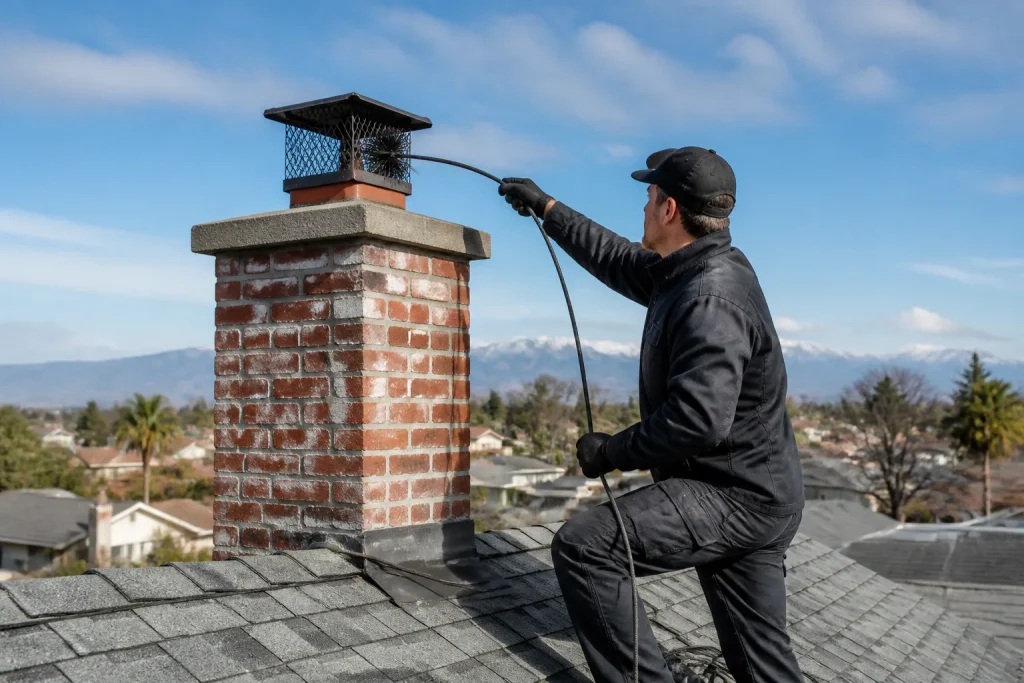
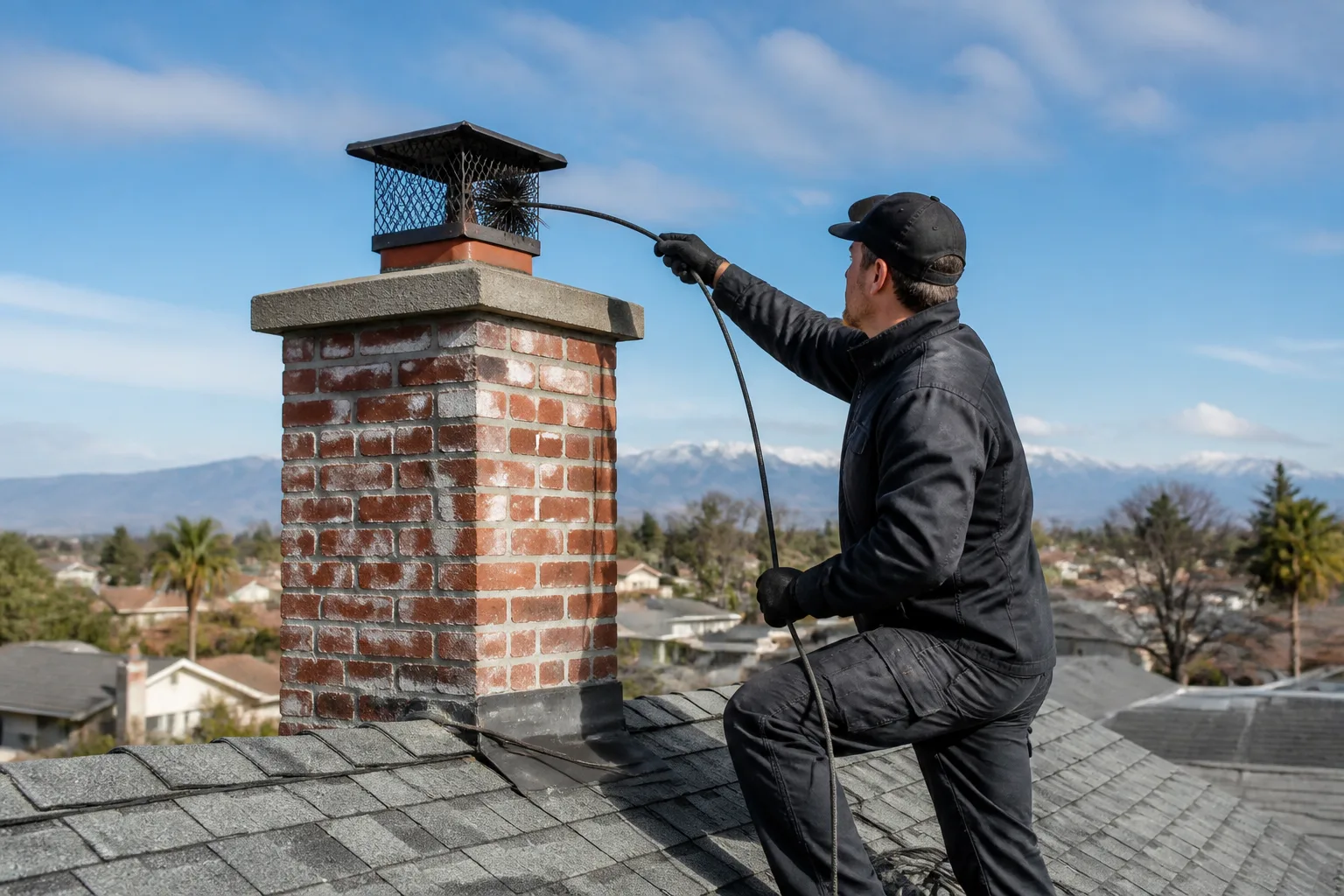
Once a DuraFlex liner is in place, it still needs annual sweeping. But a flex liner is not a porcelain-lined masonry flue, and cleaning it wrong shortens its life. We’ve seen liners in Carson homes that look like they’ve been reamed with a drain snake because someone used the wrong brush.
The right brush for a DuraFlex liner is a poly brush, not a steel wire brush. Wire brushes scratch the interior surface, especially on AL 29-4C alloy. Those scratches become corrosion initiation points. A poly brush with the correct diameter for the liner size removes creosote and soot without gouging the metal.
Cleaning frequency depends on fuel. Wood-burning appliances should be swept when creosote reaches 1/8 inch, which for most Carson households means once per season. Gas appliances with a liner need less frequent cleaning, but the liner should still be inspected annually because gas soot can be acidic and corrosive over time.
“Cleaning compatible” doesn’t mean “indestructible.” A DuraFlex liner is a manufactured component with a service life. How it’s swept during that service life has a direct effect on how long it lasts. If the sweep arrives with only a steel brush on the truck, ask questions before he starts.
What Documentation You Should Receive After a DuraFlex Installation
When a DuraFlex liner is installed correctly in a Carson home, the homeowner should receive three things before the installer leaves the driveway. If any of them are missing, you didn’t get a proper installation, no matter how good the pipe looks from the ground.
1. UL listing confirmation. DuraFlex liners are UL listed for specific fuel types and temperature ratings. There should be a document or at minimum a written confirmation on the invoice stating the liner’s UL listing number and the fuel category it’s approved for. “UL listed” without a number and a fuel type is a phrase, not a fact.
2. Sizing calculations. The installer should have measured the flue dimensions, the appliance BTU or fuel input, and the connector size, and matched the liner diameter accordingly. This calculation should be written down. It doesn’t need to be a 20-page engineering report, but if the invoice just says “6-inch DuraFlex liner installed,” there’s no evidence anyone did the math.
3. Warranty registration. DuraFlex liners carry a manufacturer’s warranty, but registration requirements vary. The installer should provide the warranty paperwork or at minimum the lot number and model number of the liner so you can register it yourself. If the installer says “it’s covered,” and hands you nothing, assume it isn’t.
The absence of documentation doesn’t always mean the liner was installed incorrectly. But it always means you can’t prove it was installed correctly. In an insurance claim situation, that’s the same thing.
When to Call a Pro
If you’re inspecting a DuraFlex liner, you’re already in professional territory. Liner inspection requires a camera. The failure points we’ve described, corroded alloy, improper connection, missing insulation, are all inside the flue where you can’t see them from either end. A Level 2 camera inspection is the only way to evaluate a liner’s condition without tearing the chimney apart.
Related services in Carson: if you need a Chimney Sweep in Carson to inspect or clean an existing flex liner, that’s our core work. If the inspection turns up damage, Chimney Repair in Carson is the next step. And if you’re already scheduling a chimney visit, a Dryer Vent Cleaning in Carson can be bundled into the same call. We pulled a dryer vent lint plug out of a home in the Del Amo area last month that filled an entire shopping bag – the homeowner had no idea until the dryer started taking two cycles per load.
Start with the Chimney Sweep Carson home page if you want to see the full scope of what we handle.
The Bottom Line
DuraFlex is a good product, but it’s a product with rules. The alloy matters. The diameter matters. The insulation matters. The connection matters. And the fuel type matters more than all of it. In Carson, where homes range from 1930s bungalows with original masonry to 1970s ranchers with undermantel gas log sets, there is no universal liner. There’s only the right liner for the specific appliance and flue you have.
If you’re in Carson and you’ve been quoted a DuraFlex liner, or you have one already and want a straight answer on whether it’s correct, call us for a free estimate at (833) 593-4907. We’ll camera-inspect, we’ll show you what we see, and we’ll tell you whether you need to spend money or not. No liner theater, no fear-selling, just what the camera shows.
Frequently Asked Questions
A DuraFlex liner installation in Carson typically runs $2,000 to $5,000 depending on liner length, diameter, alloy grade, and whether insulation is required. The liner itself is a $600 to $1,500 material cost; the rest is access, labor, top-plate and cap assembly, and the appliance connection. Call (833) 593-4907 for a free estimate with the camera inspection included.
We don’t recommend it. Liner installation involves working at height, handling flue materials that must be sized to code, and making appliance connections that have to be gas-tight and listing-compliant. A liner installed wrong can create a carbon monoxide leak or a chimney fire. This is a job for a trained chimney technician, and the cost of the labor is less than the cost of redoing an amateur installation.
A correctly specified and installed DuraFlex liner typically lasts 15 to 25 years, depending on fuel type and cleaning frequency. An incorrectly specified liner – wrong alloy, wrong fuel, missing insulation – can fail in 5 years or fewer, and the failure will be invisible until inspection.
Yes. A DuraFlex liner in a wood-burning application should be swept at least once per year, more often in homes burning soft wood or burning fires daily. Gas appliance liners should be camera-inspected annually even if sweeping isn’t needed, because gas condensate corrosion is a slow killer that only a camera sees.
Written by the team at Chimney Sweep Carson, serving Carson since 2014.
Need Chimney Cleaning Help?
Call Chimney Sweep Carson - licensed & insured, with free written estimates in Carson.
(833) 593-4907